If you’re running a creative agency right now, you’ve probably felt the shift.
Clients expect more content, faster turnarounds, better performance, and somehow, it all still needs to feel fresh and original every single time. The real challenge isn’t creativity anymore. It’s keeping up without burning out your team.
That’s where AI tools for creative agencies come in.
In simple terms, these are tools powered by artificial intelligence that help you create, analyze, and optimize your work without getting stuck in slow, manual processes. Think faster content production, smarter performance insights, and the ability to scale campaigns without constantly starting from scratch.
But here’s the important part: AI isn’t here to replace your creative team. It’s here to remove the busywork. The editing, the repurposing, the testing, the guesswork. So your team can focus on what actually makes campaigns stand out.
From AI-powered video creation to tools that tell you which ad creatives are actually converting, the right stack can completely change how your agency operates and how your clients experience your work.
In this guide, we’re breaking down the 7 must-have AI tools for agencies that are actually worth your time. Not just trendy platforms, but tools that help you move faster, work smarter, and deliver better results where it matters most, client engagement
Top AI tools for creative agencies
With so many AI tools out there, it’s easy to get overwhelmed. New platforms pop up every week, each promising to save time or boost performance.
But not all tools are built the same, especially for creative agencies. You need solutions that fit into your workflow, scale with your clients, and actually improve the way you create and deliver work.
Let’s start with the one that covers the biggest part of your process: content creation and automation.
Async: The all-in-one AI content engine for agencies
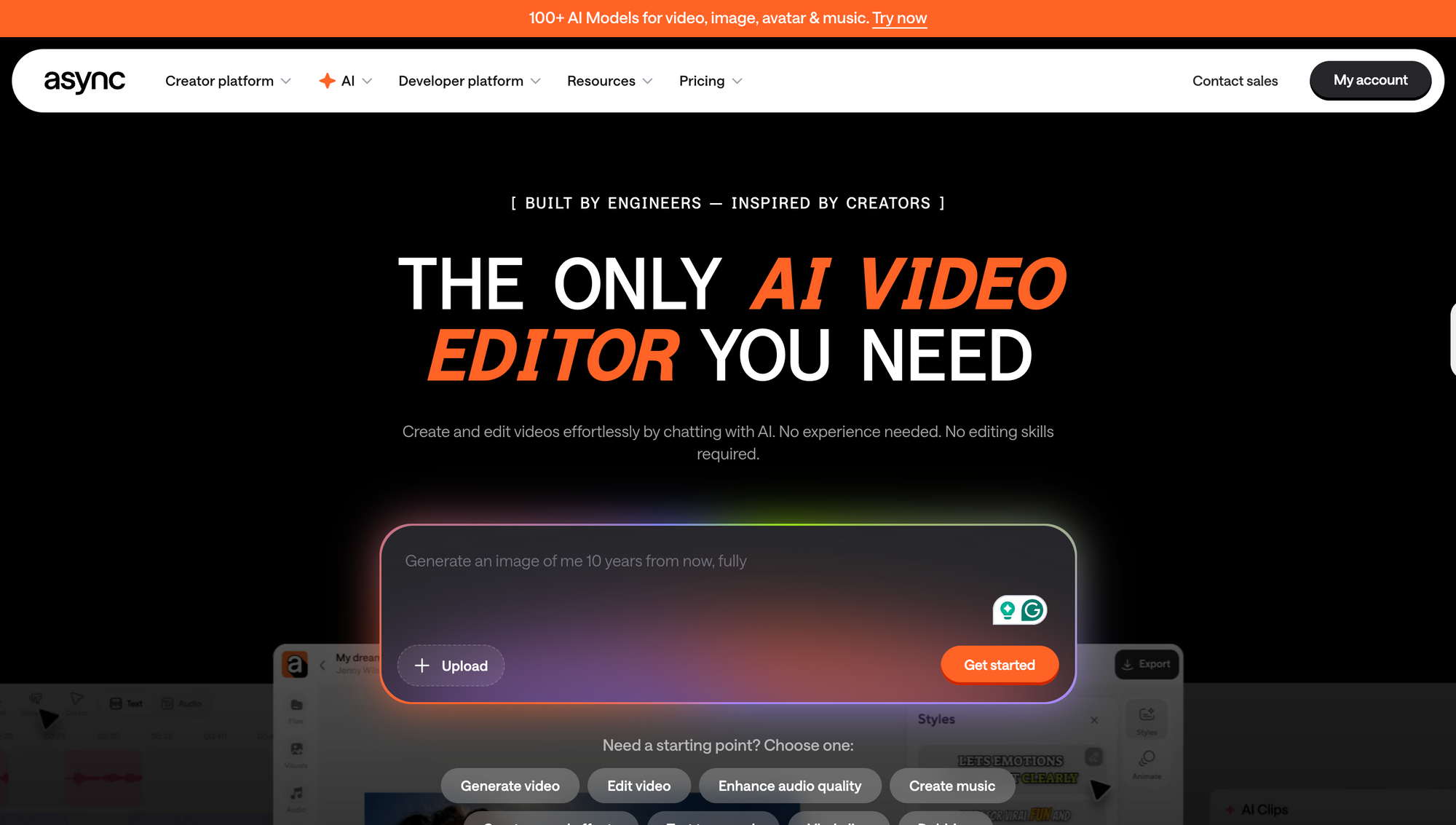
If your agency is producing content across multiple formats, video, social, campaigns, and client deliverables, you already know how fragmented the workflow can get.
One tool for editing. Another for subtitles. Another for clipping content. Another for voiceovers. It slows everything down.
Async solves that by bringing the entire content workflow into one place.
Instead of switching between tools, you can create, edit, repurpose, and optimize content inside a single platform. For agencies managing multiple clients and tight deadlines, that shift alone makes a huge difference.
What it does well
Async is built around the idea that content should not be created once and used once. It should be turned into multiple assets quickly and consistently.
- An AI video editor that lets you create and edit content without complex timelines
- AI Clips to turn long-form content like podcasts or webinars into short, social-ready videos
- AI Subtitles that improve engagement, especially for mobile-first audiences
- AI Reframe to automatically adapt content for different platforms and aspect ratios
- Access to 100+ AI models inside the editor, so you can generate visuals, videos, and more without leaving the platform
This is especially useful when you are handling multiple content formats across clients and need to move fast without sacrificing quality.
Why it stands out
Most tools focus on one part of the workflow. Editing, or subtitles, or analytics.
Async connects everything.
You can go from idea to finished content without jumping between platforms, which means fewer delays, fewer handoffs, and a much smoother production process.
It also makes repurposing feel effortless. Instead of creating new content from scratch, you can take one strong piece and turn it into multiple assets for different channels.
That is where agencies start to scale.
Where it fits in your workflow
Async works best when your agency is:
- Managing content-heavy clients
- Producing video or social media content regularly
- Repurposing long-form content into short-form formats
- Trying to increase output without increasing workload
There is also a strong advantage when it comes to voice-based content. With a built-in voice API, agencies can turn scripts or responses into natural-sounding audio, which opens up new use cases like voiceovers, interactive content, or even conversational experiences for campaigns.
Why agencies rely on it
At the end of the day, creative work is not just about ideas. It is about execution at scale.
Async helps agencies move faster, stay consistent across platforms, and deliver more value to clients without overcomplicating the process.
And when your workflow is this streamlined, you are not just saving time. You are creating more opportunities to experiment, test, and improve what you put out into the world.
Pencil AI: Smarter ad creatives with built-in analysis
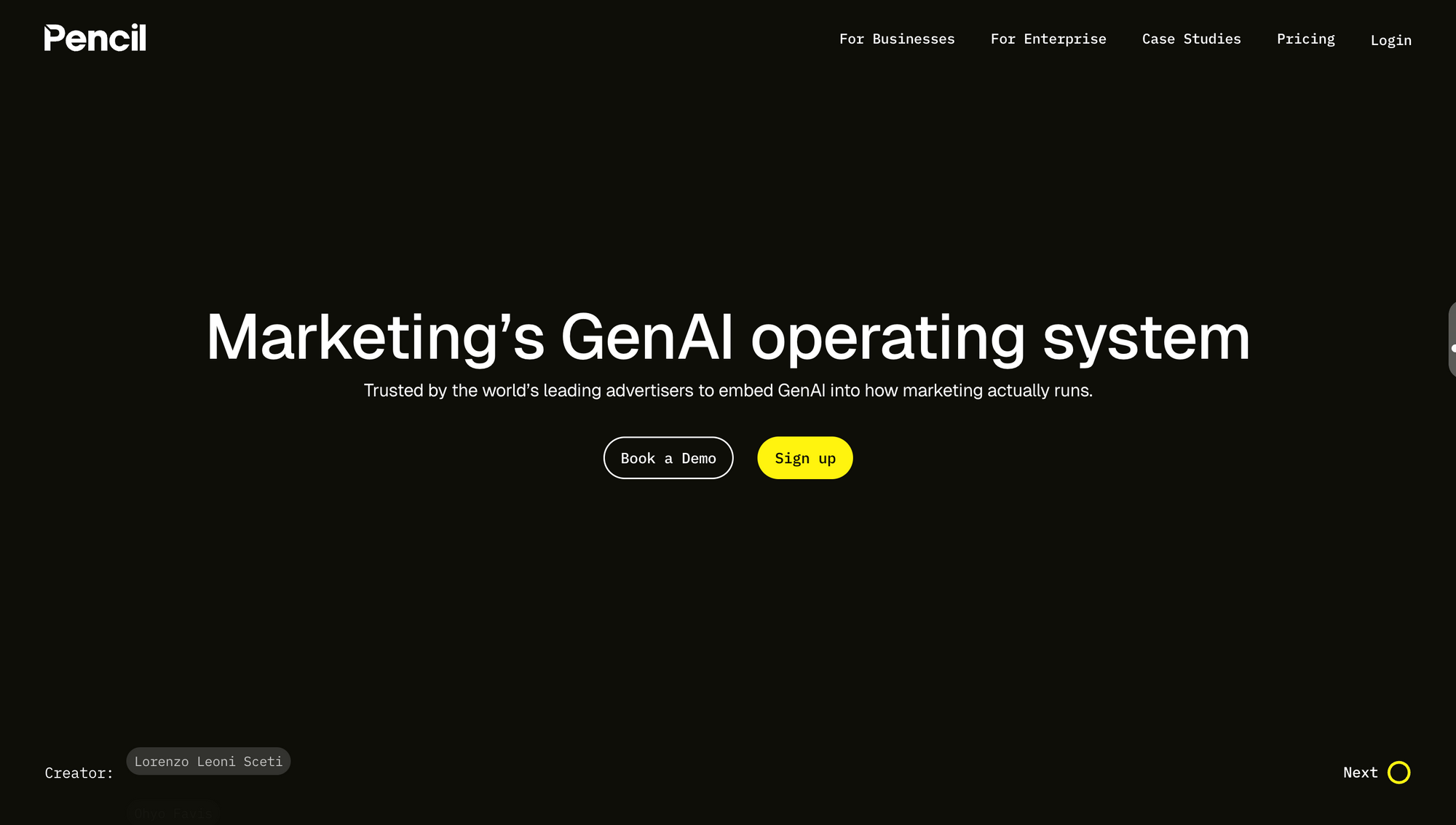
Pencil AI focuses on one thing: helping you understand which ad creatives actually work before you scale them.
It uses machine learning to generate ad variations and predict performance based on past campaign data. This makes it a strong AI ad tool with creative analysis features, especially for agencies running paid campaigns.
Core strengths:
- Generates multiple ad creatives quickly
- Predicts performance before launch
- Helps reduce wasted ad spend
Best for: Agencies that want to test and validate creatives faster in performance marketing.
AdCreative.ai: Performance-driven ad generation at scale
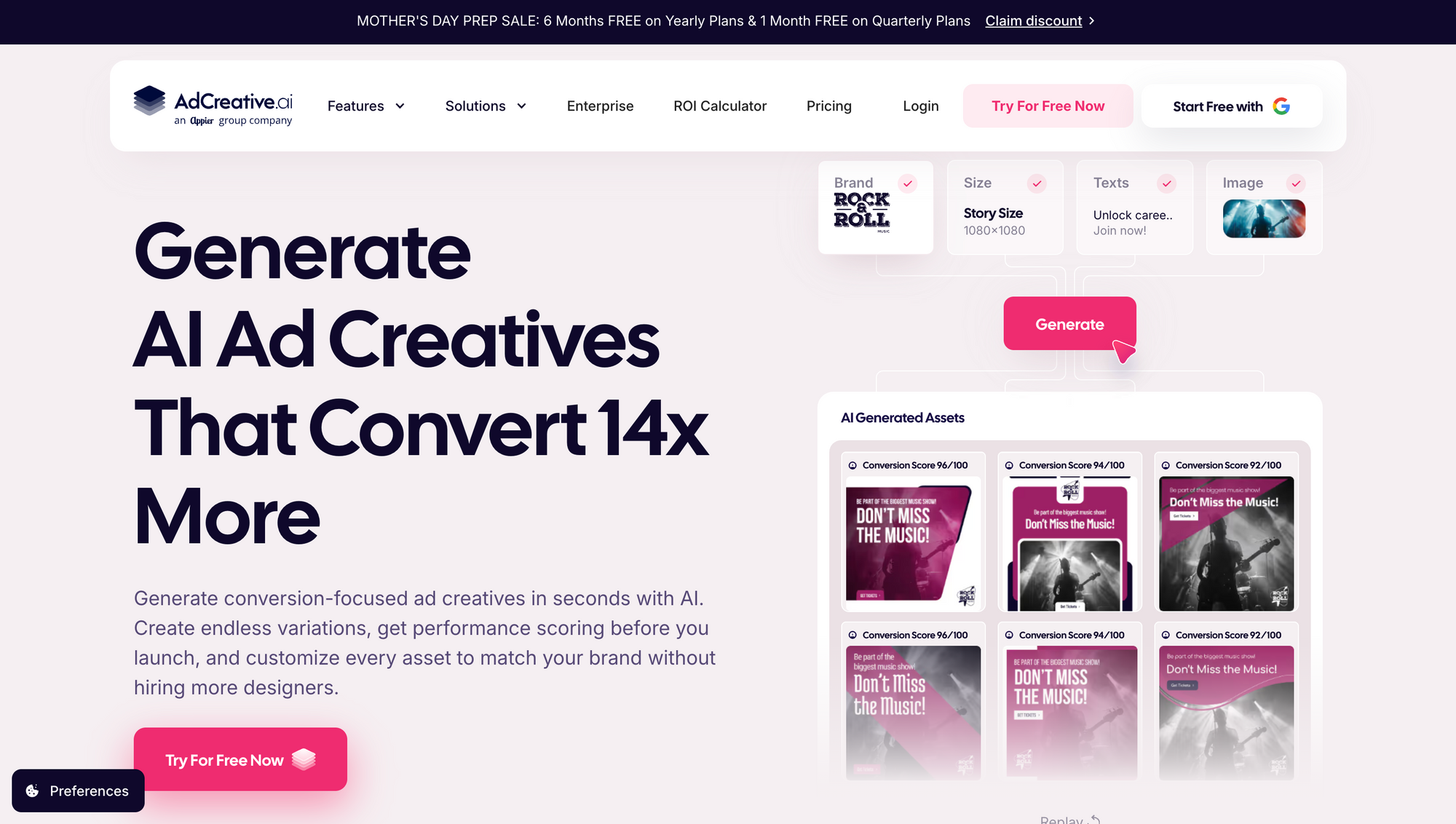
AdCreative.ai is built for speed and volume. It helps agencies generate conversion-focused ad creatives while also giving insights into which ones are likely to perform best.
It is especially useful when you are managing multiple campaigns and need consistent output.
Core strengths:
- AI-generated ad creatives for multiple platforms
- Performance scoring for each creative
- Supports media allocation optimization
Best for: Teams focused on scaling paid ads efficiently across clients.
Motion (Creative Analytics): Deep insights into what converts
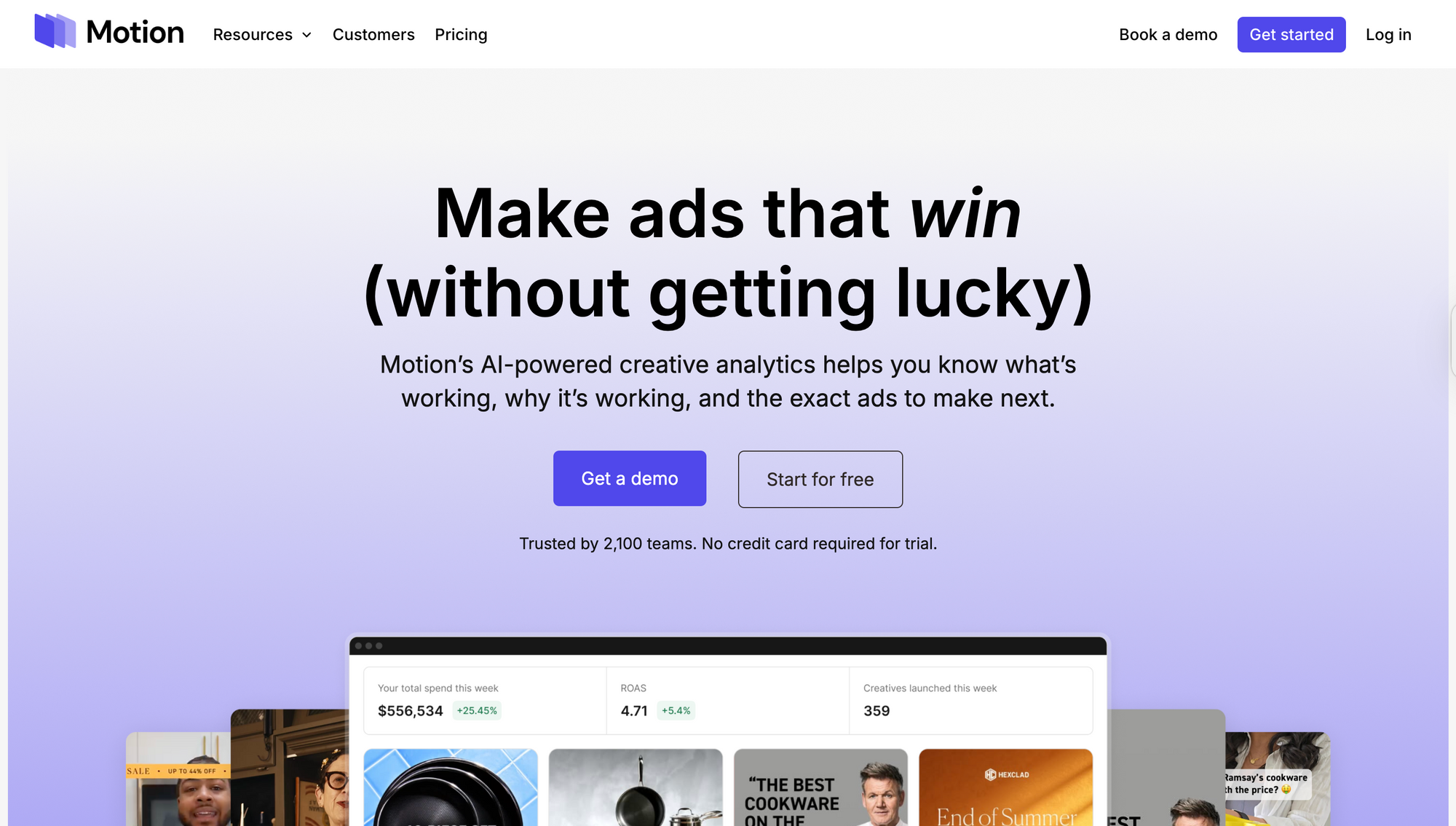
Motion is all about understanding why certain creatives perform better than others. It analyzes your ad performance and highlights patterns across visuals, messaging, and formats.
This makes it one of the more advanced AI tools with creative analysis.
Core strengths:
- Tracks creative performance across campaigns
- Identifies winning patterns in ads
- Helps optimize future creative decisions
Best for: Agencies that want data-backed creative strategy, not guesswork.
Jasper: AI support for brand messaging and campaigns
Jasper helps agencies create consistent messaging across campaigns, from ad copy to brand storytelling.
It is often used during the ideation and planning stage rather than execution.
Core strengths:
- Generates campaign ideas and copy
- Maintains brand voice consistency
- Speeds up content ideation
Best for: Teams working on brand strategy and campaign development.
Surfer AI: SEO and content optimization made practical
Surfer AI helps agencies create content that is actually optimized to rank. It combines keyword research, structure suggestions, and optimization into one workflow.
Core strengths:
- SEO-driven content recommendations
- Real-time optimization scoring
- Helps improve organic performance
Best for: Agencies managing blogs, landing pages, and organic growth.
Albert.ai: Autonomous performance marketing optimization
Albert.ai takes a more advanced approach by managing and optimizing campaigns automatically. It analyzes data in real time and adjusts budgets and targeting without constant manual input.
Core strengths:
- Automated campaign optimization
- Real-time data analysis
- Improves media allocation decisions
Best for: Agencies handling large-scale performance marketing campaigns.
Marlee: Enhancing team synergy and performance for better client outcomes
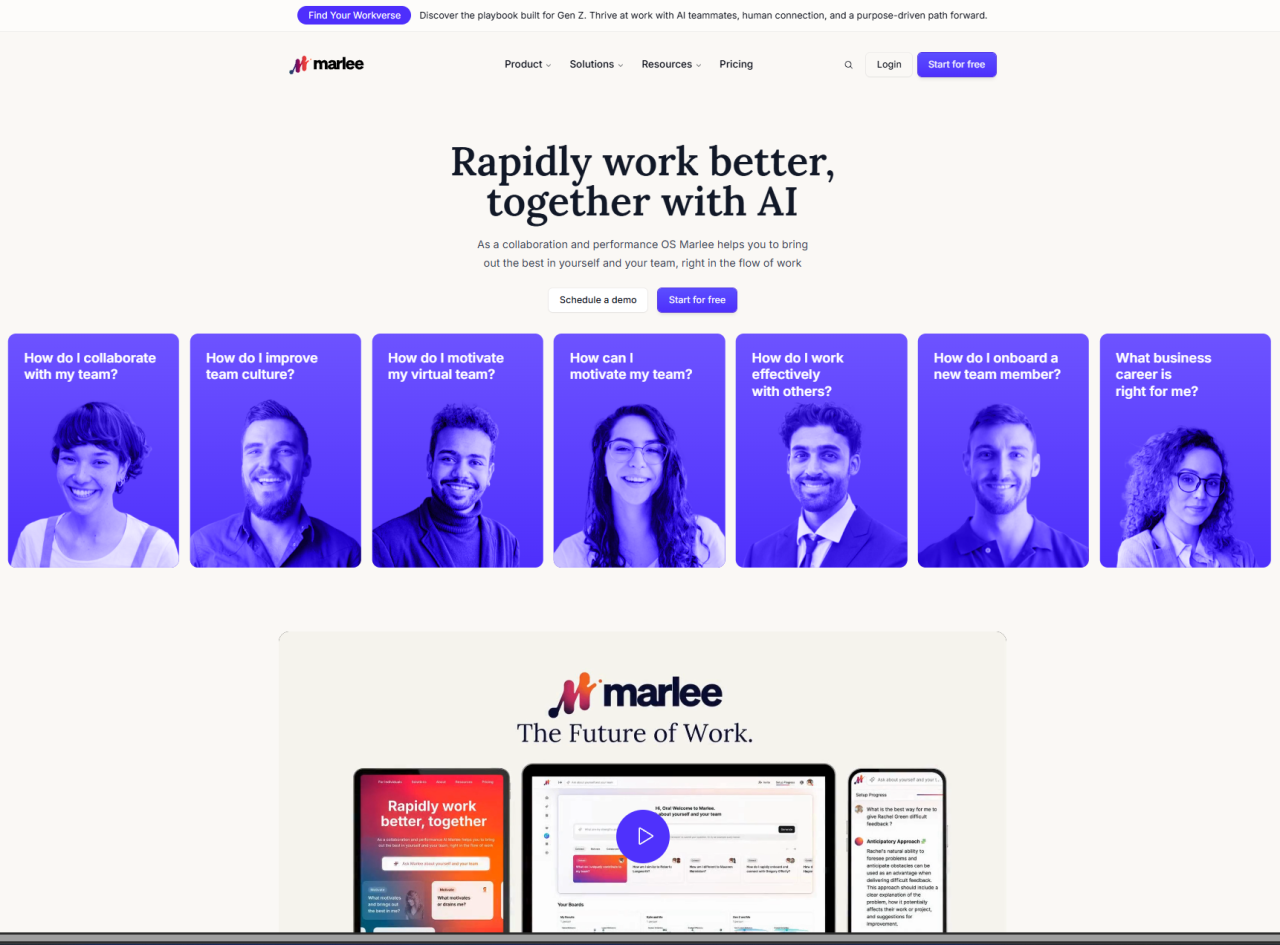
Marlee helps creative agencies build stronger, higher-performing teams by improving collaboration, communication, and motivation across projects. Using AI-driven insights and personalized coaching, Marlee identifies individual work styles, motivators, and team dynamics to help agencies reduce friction and keep creative workflows running smoothly.
For agencies managing multiple clients, deadlines, and creative personalities, Marlee supports better alignment between team members, leading to faster execution and improved client engagement outcomes.
Core strengths:
- Improves team collaboration and communication
- Provides personalized AI coaching for performance growth
- Helps identify motivators and work style compatibility
- Supports healthier, high-performing creative teams
Best for: Scaling creative agencies looking to improve team synergy and productivity while helping deliver better client experiences.
How AI is changing creative agency workflows in ways most people miss
The obvious benefit of AI is speed. The less obvious one is workflow redesign.
That distinction matters. According to McKinsey’s 2025 State of AI report, organizations are starting to see more value when they redesign workflows around AI, not when they simply add AI on top of old processes. In other words, the agencies getting the most out of AI are not just writing faster captions or generating more concepts. They are rethinking how strategy, production, approvals, and optimization connect from the start.
That is a big shift for creative agencies, because the real bottleneck has never been “coming up with ideas.” It has usually been everything around the idea: versioning, resizing, subtitle creation, feedback loops, channel adaptation, and proving to clients what is actually working.
AI is turning the content workflow into a content system
One of the most interesting changes is that agencies are moving away from one-off asset creation and toward what Adobe calls a content supply chain. Their framing is useful because it reflects how agencies actually work now: planning, creation, activation, and analytics are no longer separate steps. They are part of one connected pipeline. Adobe says integrated content supply chain systems help teams scale content and deliver more personalized experiences across channels, and it shares customer examples like 5x faster on-brand content creation and ideation and 26% higher engagement from AI-generated assets.
That matters because client engagement often drops long before a campaign “fails.” It drops when the agency cannot adapt fast enough. A team may have one strong concept, but if it takes too long to turn that concept into six cutdowns, three aspect ratios, subtitled versions, and platform-specific edits, the campaign loses momentum.
This is exactly why AI is changing the workflow itself:
- Production is becoming modular. One source asset can now become many deliverables instead of living as a single final file.
- Personalization is getting operationalized. Agencies can adapt creative for platform, audience, and format without rebuilding everything from scratch.
- Creative and analytics are moving closer together. Teams no longer have to wait until the end of a campaign to learn what is resonating.
- Approvals get easier when outputs are faster. More variations mean stakeholders can react to real options instead of abstract ideas.
The real value is not “more content.” It is a better time
A lot of AI content discussions focus on volume, but timing is the more interesting advantage.
HubSpot’s 2026 marketing statistics show that short-form video is the top ROI-driving content format at 49%, ahead of long-form video at 29% and live-streaming at 25%. The same source says 80% of marketers currently use AI for content creation and 75% use it for media production.
What that suggests is not just that agencies want more assets. It suggests they need to publish, adapt, and respond faster in formats that already have a shorter shelf life. In practice, AI helps agencies stay relevant during the window when attention is still available.
That makes a difference for client engagement because faster adaptation means you can:
- turn a webinar into short clips while the topic is still fresh
- update creative for a live campaign before fatigue fully sets in
- localize or subtitle content before distribution opportunities pass
- test multiple hooks early instead of betting everything on one version
AI is also exposing a hard truth: many agencies still do not know what to measure
This is another less obvious shift. AI is not only helping agencies produce more. It is also making weak measurement habits much harder to ignore.
HubSpot reports that only 47.18% of marketers say they understand how to incorporate AI into their marketing strategy, and only 47.63% say they know how to measure the impact of AI. At the same time, marketers’ top metrics remain deeply performance-oriented, including lead quality and MQLs (39%), lead-to-customer conversion rate (34%), ROI (31%), and customer acquisition cost (30%).
That creates a new kind of pressure on agencies. Clients do not just want to hear that AI saved time. They want to know whether it improved engagement, conversions, creative performance, or delivery speed in a way that affects outcomes.
So the agencies that benefit most from AI are usually the ones that pair it with:
- stronger creative testing
- clearer reporting frameworks
- faster feedback loops between content and performance teams
Creative quality matters even more when production gets easier
There is one more important point here: when AI lowers the cost of making content, it also raises the cost of making forgettable content.
Nielsen findings cited by the ANA show that strong creative was responsible for 86% of sales lift in digital ads. Google’s YouTube guidance also says applying its ABCD principles is associated with an average 30% lift in short-term sales likelihood and 17% lift in long-term brand contribution.
That is a useful reminder for agencies. AI does not remove the need for strong creative judgment. It actually makes that judgment more valuable, because when teams can generate more versions faster, the winners will be the agencies that know how to pick better angles, better hooks, and better formats.
So yes, AI speeds up production. But the deeper transformation is this: it pushes agencies to become more systematic about what they make, why they make it, and how quickly they can improve it.
What this means for agencies in practice
The agencies that are pulling ahead are usually doing three things at once:
- They are compressing the path from idea to deliverable.
- They are repurposing content deliberately, not as an afterthought.
- They are connecting creation to performance data faster than before.
That is why AI is becoming such a meaningful part of creative agency operations. Not because it makes creativity automatic, but because it gives agencies a better system for turning creative thinking into repeatable client results.
How to choose the right AI tools for your agency
At this point, the problem is not finding AI tools. It is choosing the right ones without turning your workflow into chaos.
Because here’s what usually happens. Agencies start adding tools one by one, and suddenly you have five platforms doing overlapping things, your team is confused, and nothing actually feels faster.
So instead of asking “what’s the best AI tool,” it’s better to ask: what part of our workflow needs the most help right now?
Start with your biggest bottleneck
Every agency has one.
It might be:
- content production taking too long
- too many manual edits and revisions
- slow campaign testing
- unclear performance insights
The right tool should solve that specific problem first. Not everything at once.
For example, if your team is spending hours turning one video into multiple assets, a content-focused tool like Async makes sense. If the issue is knowing which ads actually perform, then a creative analysis tool becomes more valuable.
Look for tools that reduce steps, not add them
This is where many teams get it wrong.
Some tools look powerful but actually add more steps to your process. You still have to export files, upload them somewhere else, and repeat the same actions across platforms.
The better choice is usually the tool that:
- replaces multiple steps with one workflow
- keeps everything in one place
- reduces handoffs between team members
That is how you actually save time.
Think in workflows, not features
A tool might have impressive features, but if it does not fit how your team works, it will not get used.
Instead of focusing on feature lists, ask:
- does this fit into our current process easily?
- will the team actually use it daily?
- does it connect with the tools we already rely on?
The best tools feel like a natural extension of your workflow, not something you have to force into it.
Avoid tool overload early on
More tools does not mean better results.
In fact, too many tools usually lead to:
- inconsistent outputs
- slower onboarding for team members
- fragmented data and reporting
A smaller, well-chosen stack almost always performs better than a complex one.
Make sure it helps with both speed and outcomes
Speed is important, but it is not enough on its own.
The tool you choose should also help you:
- improve engagement
- test ideas faster
- make better creative decisions
- show clearer results to clients
Because at the end of the day, clients do not care how fast you work. They care about what the work achieves.
Choosing the right AI tools is less about chasing trends and more about building a system that actually supports your team.
And once that system is in place, everything else gets easier. Production, testing, reporting, and even client communication.
Common mistakes agencies make when using AI
AI can seriously upgrade how your agency works. But only if it is used the right way.
What we are seeing more often is agencies adopting AI tools quickly, but not really changing how they work around them. That usually leads to wasted time, inconsistent results, and frustrated teams.
Using too many tools at once
It is tempting to try everything.
One tool for copy, one for design, one for video, one for analytics, and suddenly your workflow is split across five platforms that do not talk to each other.
Instead of moving faster, your team spends more time switching tabs, exporting files, and figuring out where things live.
A tighter stack almost always performs better than a crowded one.
Treating AI like a shortcut, not a system
AI works best when it is part of a process.
If your team is just using it occasionally to generate a caption or an idea, you are not really getting the full value. The real gains happen when AI is integrated into how you plan, create, and optimize content from start to finish.
That is when you start seeing consistency and scale.
Ignoring creative quality
This one is easy to overlook.
When it becomes easier to produce more content, there is a risk of lowering the bar without realizing it. More outputs do not automatically mean better results.
Strong hooks, clear messaging, and good storytelling still matter. A lot.
AI can generate options, but your team still needs to choose what is actually worth publishing.
Not connecting the creative to the performance
Some agencies use AI for production, others for analytics, but they keep those two worlds separate.
That creates a gap.
If your content team is not learning from performance data, you end up repeating the same mistakes. And if your performance team is not involved in creative decisions, you miss opportunities to improve what you put out.
The real advantage comes when creativity and performance are connected and constantly informing each other.
Over-automating too early
Automation sounds great, but too much of it too soon can backfire.
If you automate everything without understanding what works first, you end up scaling the wrong things. That leads to campaigns that feel generic or disconnected from the audience.
It is usually better to:
- test manually first
- identify what works
- then use AI to scale it
Not training the team properly
Even the best tools will not help if the team does not know how to use them well.
This shows up as:
- inconsistent outputs
- underused features
- resistance to adopting the tool
A bit of upfront training goes a long way. Especially when you are introducing tools that affect daily workflows.
Focusing on speed instead of outcomes
Saving time is great. But it is not the end goal.
If AI helps you produce content faster, but engagement, conversions, or client satisfaction do not improve, then something is missing.
The goal is not just faster output. It is a better result.
The agencies that really benefit from AI are not the ones using it the most. They are the ones using it intentionally.
They know where it fits, what it improves, and how to turn it into a consistent advantage.
The future of AI in creative agencies
AI is already changing how agencies work, but the next phase is where things get really interesting. It is less about tools and more about how creativity, data, and execution come together.
Here is what is starting to take shape.
- Creative production becomes instant, not scheduled: Instead of planning content weeks in advance, agencies are moving toward on-demand creation. Ideas can be turned into assets in hours, not days, which makes campaigns feel more reactive and relevant.
- Campaigns evolve in real time: Rather than launching and waiting, agencies are starting to adjust creatives continuously based on performance. Messaging, visuals, and formats can shift while the campaign is still running.
- Personalization moves from concept to execution: It is one thing to say “we personalize content.” It is another thing to actually produce variations for different audiences at scale. AI is making that operational, not just theoretical.
- Short-form content becomes the default output: Long-form content will still exist, but most distribution will revolve around shorter, platform-specific versions. Agencies will think in terms of one core idea that branches into multiple formats.
- Creative and performance teams merge workflows: The gap between people who create and people who analyze is getting smaller. Decisions about what to produce will increasingly be influenced by performance data from the start.
- AI becomes part of the creative process, not just execution: Instead of using AI only for editing or automation, teams are starting to use it during ideation. Generating angles, testing hooks, exploring variations before production even begins.
- Fewer tools, more connected systems: The trend is moving away from stacking dozens of tools and toward platforms that handle multiple parts of the workflow in one place. This reduces friction and keeps teams focused.
What all of this really points to is a shift in mindset.
Agencies will not just be judged by how creative their ideas are, but by how quickly they can turn those ideas into high-performing, adaptable campaigns.
And the ones that figure this out early will have a serious advantage.
Where creativity meets scalability
Creative agencies are not short on ideas. The challenge is turning those ideas into consistent, high-performing output.
That is exactly where AI makes the difference.
The right tools help you create faster, test smarter, and adapt content without starting from scratch every time. When your workflow is connected, from production to performance, everything becomes easier to manage and scale.
In the end, it is not about using more AI. It is about using it with intention.
Because the agencies that win are the ones that can turn one strong idea into many impactful results, and keep improving them along the way.
FAQs
Who offers the best AI creative ad analysis?
Several platforms compete here, but tools like Pencil AI and Motion are often considered among those that offer the best AI creative ad analysis. They combine generation with insights, helping agencies understand which creatives are likely to perform before scaling campaigns.
How can AI enhance client engagement in creative agencies?
AI enhances engagement by enabling faster production, personalization, and optimization. Many AI tools for creative agencies now allow teams to test multiple variations, adapt messaging in real time, and deliver content that feels more relevant to each audience segment.
What are the best AI tools for creative agencies in 2026?
The best AI tools for agencies typically cover different parts of the workflow. Async leads in content creation, while tools like AdCreative.ai and Albert.ai support AI in performance marketing and media allocation optimization. Platforms like Motion and Pencil AI focus on creative analysis, and Surfer AI helps with content performance.
How do AI tools improve performance marketing results?
Modern performance marketing tools powered by AI analyze large datasets to identify patterns in user behavior and creative performance. This helps agencies optimize targeting, adjust budgets, and scale campaigns more efficiently using AI tools for media allocation optimization.
Are there AI tools for marketing agencies that focus on creative analysis?
Yes, many AI tools for marketing agencies now include built-in analytics. Tools like Motion and Pencil AI are strong examples of AI tools with creative analysis, helping teams understand which visuals, formats, and messages drive results.
What are the leading AI tools for brand strategy execution?
Tools like Jasper and other leading AI tools for brand strategy execution help agencies develop messaging, campaign ideas, and brand voice consistency. These tools support the early stages of creative development before production begins.
What are the best AI tools for creative design in advertising agencies?
The best AI tools for creative design in advertising agencies usually combine speed with flexibility. Platforms like Async allow teams to create and adapt video content, while other tools focus on ad creatives, visuals, and campaign assets tailored for different channels.