
Your follower count is climbing on Instagram. Your watch time is up on Facebook. People keep coming back. However, none of that means your content is actually working. While social media retention tells you who stayed, it doesn't tell you who left. It says nothing about what they did next.
And that gap between attention paid and action taken is where many social strategies quietly fall apart.
In this article, we’ll explain why this happens and how you can turn each retention percentage into real conversion scores.
What social media retention actually measures
Retention tracks the audience members who stick around.
• Think followers who don't churn, viewers who return week after week
• Subscribers who keep showing up
It shows up on your dashboard as follower count and growth rate, average watch time, returning viewer percentages, and DAU/MAU (daily active users to monthly active users) ratios.
These are real signals. They confirm that your content holds appeal and that your audience hasn't written you off.
The problem is that none of them confirms what your audience does after they've seen you. And that distinction matters more than most social teams realize until they sit down with sales data.
Why high retention can still mean low impact
Retention earns you attention. But attention doesn’t automatically translate into impact, and here’s why:
1. Organic reach is smaller than your follower count suggests
Platform algorithms are not designed to deliver your content to everyone who follows you. They are designed to keep users on the platform. That usually means prioritizing content that generates fast reactions, not content that sends people elsewhere to make a decision.
Your actual distribution window is often a fraction of your subscriber count, regardless of how loyal your subscriber base is.
2. Engagement benchmarks are lower than most teams expect
Even a large, retained audience can generate a small pool of meaningful interactions per post. According to Rival IQ's 2025 Social Media Industry Benchmark Report, the all-industry median engagement rate on Instagram sits at 0.36%. On Facebook, it drops to 0.046%. On X (formerly Twitter), it falls further to approximately 0.015%.
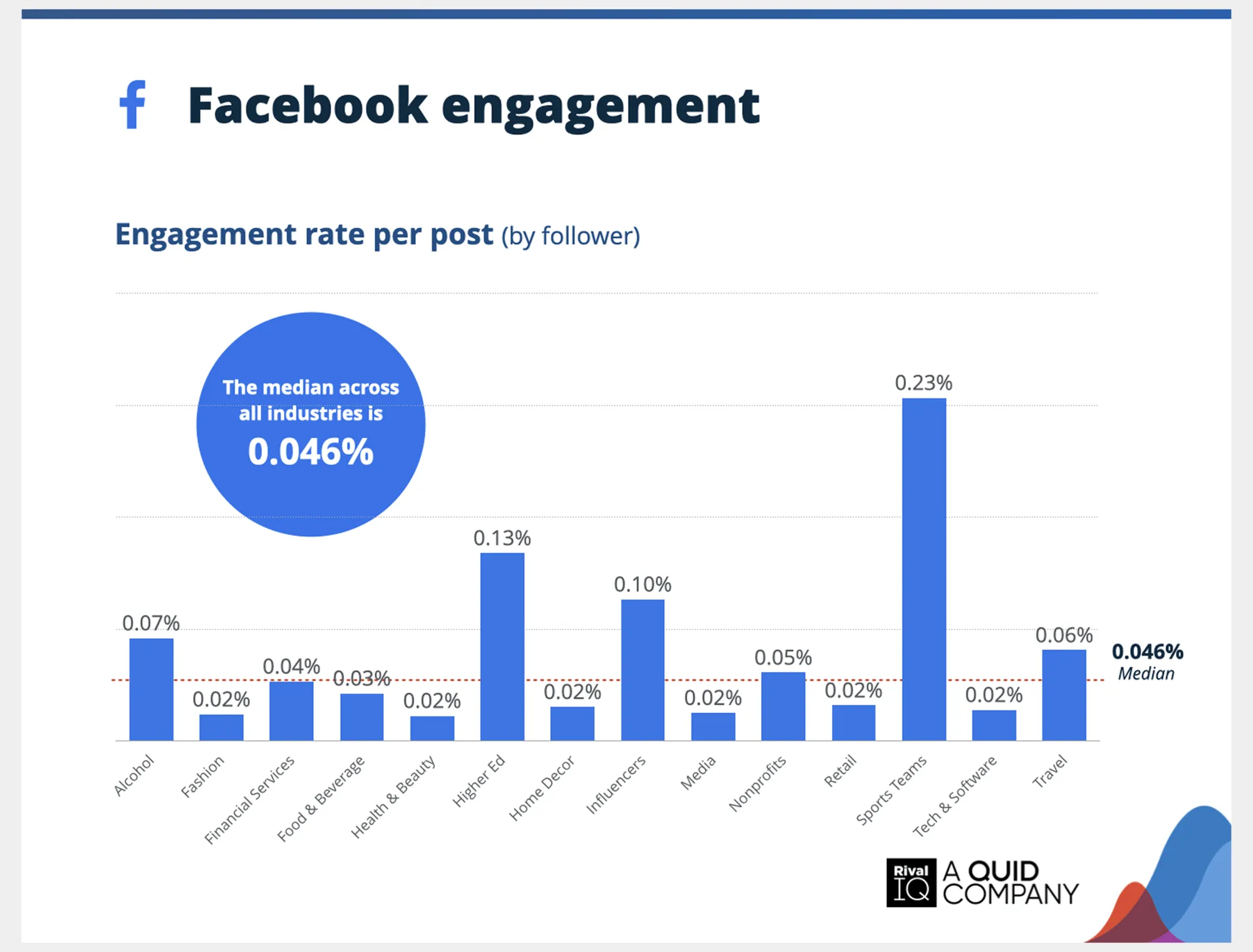
You know what that means for your business? If your numbers hover near those benchmarks, you are performing normally, not particularly well, and not converting attention at any real scale.
3. Audience misalignment turns retention into a dead end
You can grow the wrong crowd. Trend-chasing content, broad giveaways, and viral posts that have nothing to do with your actual product all attract followers who will never buy from you. They stay because the content entertains them. High retention with that kind of audience reads beautifully in a report and does almost nothing for revenue.
Joern Meissner, Founder and Chairman of Manhattan Review, has watched this play out in the education space, where content that generates strong engagement often misses the people who actually need test prep.
"Holding someone's attention and earning their trust are two different things entirely. You can publish daily and still never give your audience a reason to choose you when they need what you offer most. Retention only matters when the people you're retaining actually need what you provide."
5 reasons your retained audience isn't converting
Knowing where the breakdown happens makes it far easier to fix. Here are the five most common reasons retention stops short of impact.
Your content doesn't have a clear next step
Most social content is built to stop the scroll, not to move people forward. When a post ends without a specific action to take, the viewer has no reason to act. They like it, close the app, and move on. Without a bridge from content to conversion, high retention just cycles back to more passive consumption.
You're measuring vanity metrics instead of progress metrics
Likes and follower counts feel like evidence of progress. They are not evidence of business outcomes. According to Sprout Social's research, engagement is the primary metric teams use to measure social ROI, yet only 57% of those same teams track revenue impact at all.
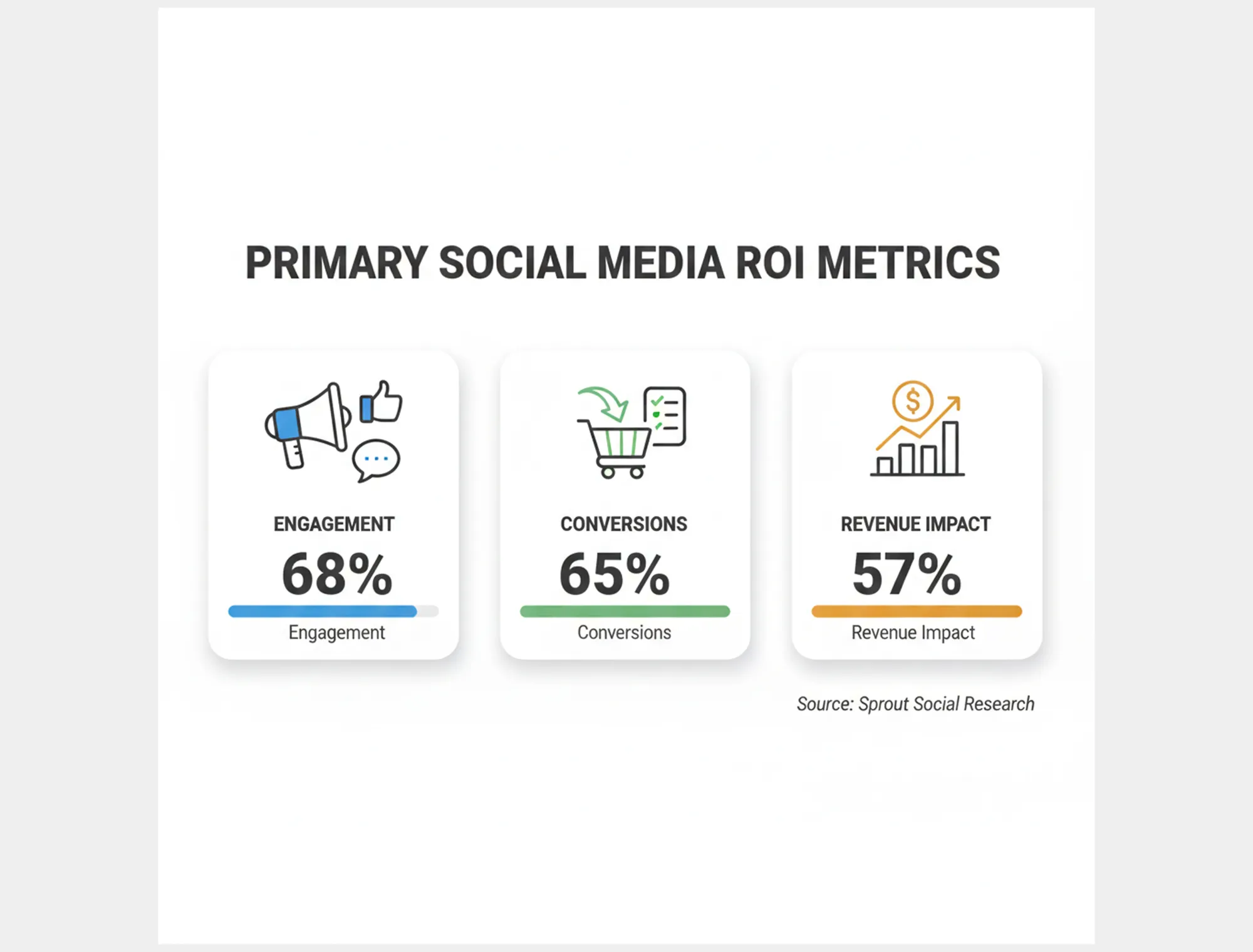
That means more than four in ten social programs have no line of sight between what they post and what it generates. Saves, link click-through rates, form completions, and demo requests are the signals that indicate real movement. If those numbers aren't in your reporting, you're measuring how busy your content looks, not how well it works.
Your social audience and your buyer don't match
This one is harder to catch in a dashboard. If your most engaging posts attract an audience that doesn't overlap with your actual customers, you have a mismatch that no amount of posting frequency will fix.
The Founder of GoodWishes, an AI-powered platform for personalized wishes and greetings, puts it plainly. "When your content brings in people who love what you post but have no use for what you sell, you're building an audience, not a business. The most important question you can ask is whether the people who follow you are the same people who would actually pay for you."
The path from social to purchase has too much friction
Even motivated buyers drop off when the journey from a post to a purchase decision involves too many unclear steps.
If your social content isn't connected to landing pages, lead magnets, or offers that match the intent behind the click, you lose people at the entry point. A well-mapped content creation workflow that ties each post to a conversion destination solves this before it becomes a retention problem.
You're optimizing for reach instead of relevance
Broad content attracts broad audiences. Specific content attracts the people who need what you provide. Cris McKee, Founder at GetWorksheets, a platform offering free academic worksheets for teachers and homeschool families, sees this distinction every day.
"The content that performs best for us is never the most popular content. It's the most specific. When we solve an exact problem a teacher has on a Tuesday afternoon, we earn the kind of loyalty that keeps someone coming back for years, not just a week."
Worth saying out loud. Those are two completely different outcomes from the same act of posting.
How to turn social media retention into real business impact
These five approaches give you somewhere to start, regardless of your platform or audience size.
1. Audit every post against a business outcome
Most social audits measure performance against reach and engagement. Run a different kind of audit. Look at what happened after each post. How many people clicked? How many of those became leads, subscribers, or customers?
Posts that looked average by engagement might have driven the most action, and posts that earned the most likes might have done nothing traceable.
Here is how to run this audit without overcomplicating it:
• Map the last 90 days of posts to conversion events. For each post, identify whether a trackable outcome existed at all. If no conversion event was attached, that post had no chance of generating a measurable impact
• Compare saves and shares against link clicks. Saves signal interest. Shares signal resonance. Clicks signal intent. You want all three, but only clicks connected to a conversion path can be traced to revenue
Also, add UTM parameters to every link you publish. Without them, your analytics cannot attribute outcomes to specific posts or campaigns. This is the single cheapest fix with the highest return on information.
2. Build content for the middle of the funnel
Most social content lives at the top of the funnel. It builds awareness. Awareness-stage content rarely converts on its own. Middle-funnel content reaches people who already know you and gives them a specific reason to take the next step. Think comparison guides, mini-courses, webinars, calculators, and checklists.
Here are the formats worth testing first:
• Lead magnets aligned to your highest-performing post topics. Let’s say you run a fashion brand, and your most-viewed content is on customized apparel styles. It's worth going deeper into that topic. You can turn these styles, with extra add-ons, into a logbook or style guide and use it to capture email subscribers
• Live office hours or Q&A sessions. High-intent audience members self-select into these. They show up with questions about your actual product, which is a far stronger conversion signal than a passive view
• Decision-stage guides. When someone is already thinking about buying in your category, a walkthrough of their decision builds trust and puts you in the right conversation at the right time.
Matthew Thompson, Founder of OwnerWebs, a vacation rental website builder that helps property owners stop paying OTA commissions and start booking direct, knows exactly what staying in awareness mode costs.
"Social media can fill your pipeline with attention, but attention doesn't pay commissions or keep a calendar full. What shifted our conversion numbers was creating content that answered the exact question someone asks the week before they decide to build a direct-booking site. That kind of content earns action, not just views."
3. Design your content for depth, not just reach
Reach tells you how many people saw something. Depth tells you how many people spent time with it, saved it, or followed through.
For depth, give these formats a real run:
• Carousels and multi-step posts. These require active engagement from viewers and tend to attract people who are genuinely curious rather than those who scroll passively. Seasonal content structured across multiple frames is a strong example of depth-first design in practice
• Posts that teach something specific. Content that explains a process, answers a precise question, or challenges a common assumption tends to earn saves. Saved posts come back to mind when someone is ready to act
You should also track depth metrics, including average watch time, saves, comments that reference specific points, and link click-through rate, which are more predictive of eventual conversion than raw reach.
4. Track the full journey from social to sale
You cannot improve what you do not measure. Most teams track social activity. Fewer track what that social activity leads to. Setting up proper attribution means you can answer, with real confidence, which posts drove trials, signups, consultations, or purchases.
Start here:
• Create GA4 conversion events that match your actual goals. Trial starts, demo bookings, or email subscriptions tell you far more than page views ever will
• Connect social traffic to your CRM. When you can see which content a lead first engaged with before entering your pipeline, you can make smarter decisions about what to create next
In addition, review social-sourced pipelines with your sales team each quarter. Their observations about what leads ask about and how informed they arrive provide a feedback loop that no dashboard can replicate
5. Move high-intent conversations to conversion-ready channels
Not every social interaction belongs on social media. When someone asks a detailed question in the comments, DMs about pricing, or mentions they've been following you for months, they're signaling intent.
The right move is to transition them to a channel built for conversion, such as email, a discovery call, or a live chat, without making it feel like a pitch.
Kashif Ali, Growth Specialist of PsychologySchoolGuide.net, sees this pattern consistently in how their customers actually convert.
"The customers who become repeat buyers are rarely converted through a post alone. They asked a question, they got a real answer, and that conversation moved beyond a comment thread. Social media introduced us. The relationship formed somewhere else."
That is the handoff most social strategies never plan for. Building a social media marketing strategy that accounts for it is what separates teams that grow audiences from teams that grow businesses.
Conclusion
A retained audience is worth something. It tells you that you have earned attention and that people trust you enough to keep showing up. What it doesn't tell you is whether any of that attention is moving in a useful direction.
Pick one post from the last 30 days that performed well by engagement and trace what happened after the click. If you cannot trace it, that is your first problem to fix. Solve the measurement gap, then solve the content gap, and your retention will start doing more than just look good on a dashboard.