Open TikTok, Instagram, or YouTube right now, and you know what you'll find.
Short videos, everywhere. It's not a novelty content format anymore. According to Google, over 2 billion people watch YouTube Shorts monthly.
Meta reports that Reels drive more than 50% of time spent on Instagram, while TikTok users spend an average of 95 minutes per day on the app. Add to that, Microsoft research shows the average human attention span has dropped to about 8 seconds, which explains why compressed video keeps winning.
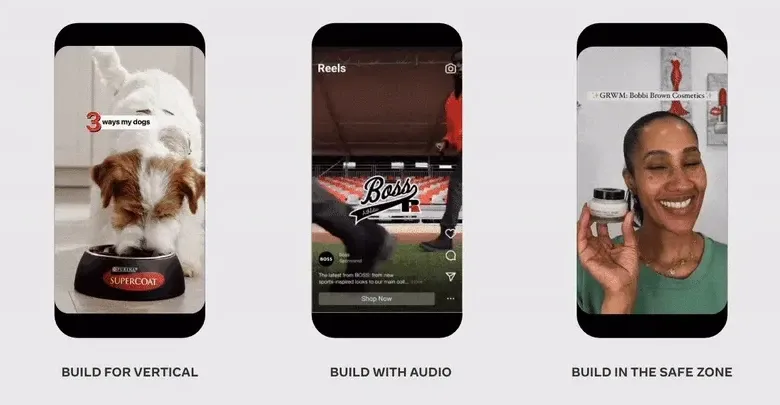
Simply put, short videos work because they fit how people actually consume content today: fast, fragmented, mobile first, and constantly distracted. And many of your audience will likely choose a couple of illustrative short videos over long-form content.
In this article, we’ll explain what short-form videos are all about and why they beat long chunky lengths of text and videos.
What counts as short-form?
Usually, we're talking for 60 seconds or less. That's become the magic number, long enough to tell a story, and short enough that people won't bail halfway through.
Remember Vine? Those six-second loops trained an entire generation to think in micro-stories.
Then Snapchat stories happened, Musical.ly morphed into TikTok, and suddenly everyone's a filmmaker. Now you've got TikTok, Instagram Reels, and YouTube Shorts all fighting for the same eyeballs.
They're all slightly different, but the basics are the same. Each app enabled the creation of short, vertical videos with punchy openings, aesthetic captions, because nobody uses sound in public, and some kind of payoff at the end. It's its own language now.
The summary? Anything within 15-60 seconds or generally under a minute is short-form. Longer than that and less than 10 minutes is mid-length. Anything beyond is basically long-form, or a movie already.
Why our brains love this stuff
Brandy Hastings, SEO Strategist at SmartSites, sees this pattern across platforms and industries. When we asked why we're all addicted to these tiny videos, she said It's not an addiction, exactly.
“Our brains just really like complete stories with quick payoffs. A 30-second video gives you a beginning, middle, and end before you can get bored. That's satisfying in a way that scrolling through long text posts isn't.
The data backs this up. Vidyard found that videos under a minute get watched all the way through more often than longer stuff. This makes sense because, if you start a 10-minute video and get interrupted, you probably won't come back. But 30 seconds? You’re more likely to stick around.
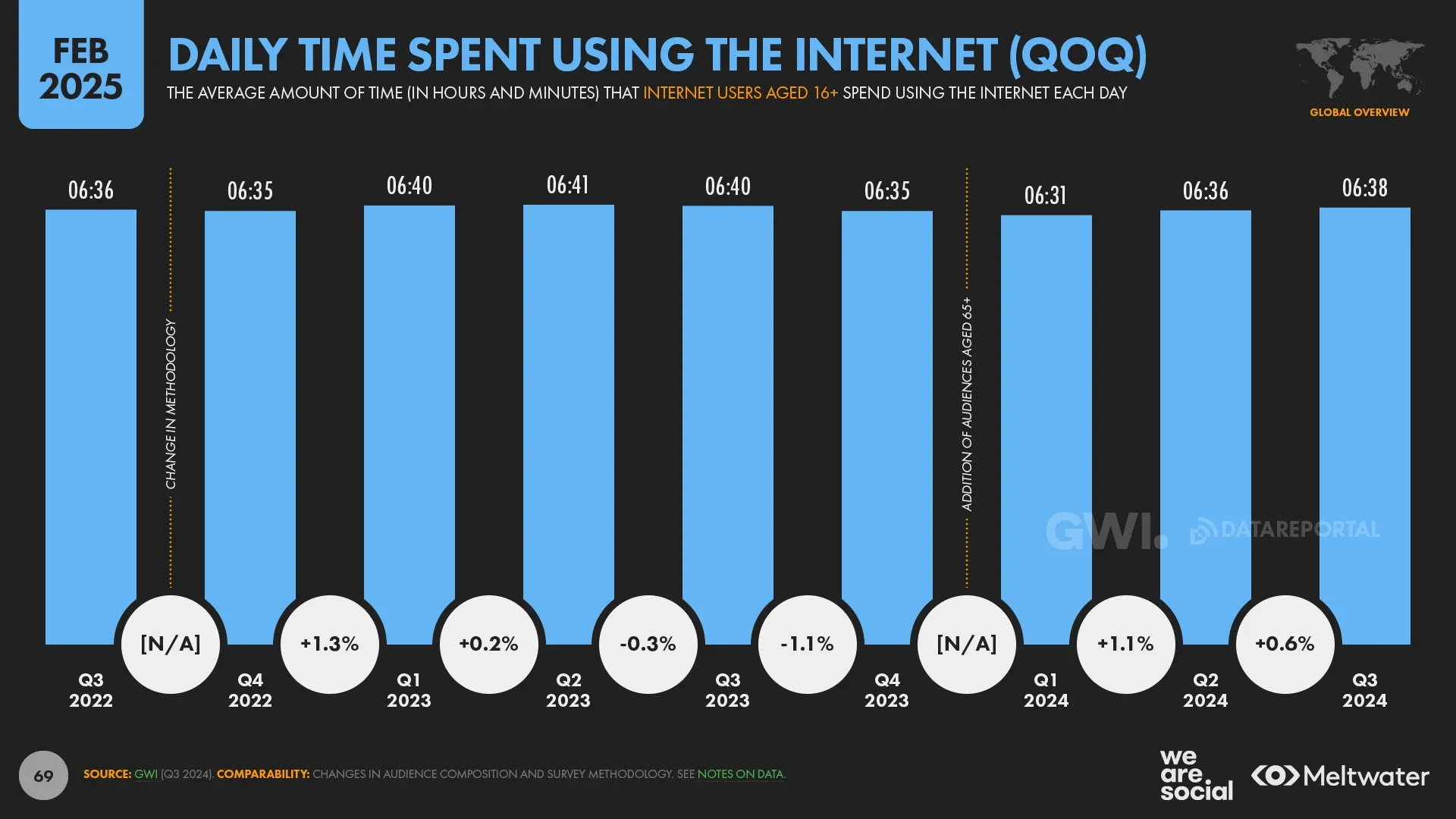
Plus, let's be honest about how we use our phones. DataReportal says we're on them, mostly on social apps, surfing a wide variety of content, for hours every day. Short videos are designed to fit in that quick surf, and exactly how we actually behave, not how we wish we behaved.
AI changed everything
Here's where things get interesting, according to Fineas Tatar, Co-CEO at Viva, where he helps businesses fastrack repetitive operations with executive assistants.
“A couple of years ago, cutting a podcast into clips meant spending an entire weekend inside editing software. Now, AI handles most of that work. You can offload the heavy lifting and focus on selecting what matters instead of doing everything manually. That’s like having your own assistant handle bulky but monotonous tasks while you focus on what matters the most.”
For instance, platforms like Podcastle can easily turn your long videos into social-ready AI clips, ranging from a few seconds to a couple of minutes, suggest the best shorts to post, and automatically add subtitles. No technical editing skill needed on your end.
The text-based editing alone saves hours. You literally just delete sentences from a transcript, and the video edits itself. Add in silence removal and smart cropping, and suddenly you can pump out content without burning out.
Kos Chekanov, CEO at Artkai, builds AI-driven workflows for businesses that prioritize speed without sacrificing clarity. When we asked what actually changes with AI, he pointed to execution, not creativity.
“AI did not change what makes a good clip. It changed how fast you can get to it. Instead of spending hours editing, you spend your time selecting the moments that already work. Less time spent on editing means less editing costs, especially if you plan to churn out several content as soon as possible.”
Long vs. short: Just different sides of the same coin
Long-form content isn't dead. If you're teaching something complicated or telling a real story, you need time. Podcasts, YouTube essays, and documentaries. They're not going anywhere.
But short-form does different work in a modern World where people expect delivery to be fast, accurate, and concise. It's like the difference between a novel and a short poem. The latter passes messages faster than the former.
Tyler Denk, Co-founder and CEO at Beehiiv, builds tools for creators who rely on audience trust rather than one-time virality. He frames the relationship clearly.
“Short content should answer one question: Is this worth more of your time? Long content answers the next one: Is this worth believing? If you use short forms to explain everything, you remove the reason for someone to continue.”
“You simply need to find the sweet spot when using both. Record a long podcast, then chop it into bite-sized pieces. Each clip becomes a gateway to your longer content and increases ROI.”
Brand case studies: Who's actually crushing it?
The pattern is pretty clear. If you treat short-form like its own thing, not just chopped-up commercials, you’re going to win. Here are some real-life examples:
Ryanair
The Irish airline group followed a similar path by breaking every rule traditional airlines obey. Their TikTok content leans into self-mockery, low-budget memes, and exaggerated reactions to customer complaints. That tone would never survive in a press release or long campaign deck, but it thrives in thirty seconds.
Ryanair has generated over 1.8+ million followers using this approach.
Duolingo
Duolingo proves that short-form works when a brand understands the platform culture. Rather than pushing product features, the company let its owl mascot behave like a chaotic internet character. The result was massive organic reach, constant remixing by users, and a brand voice that younger audiences actively look forward to seeing.
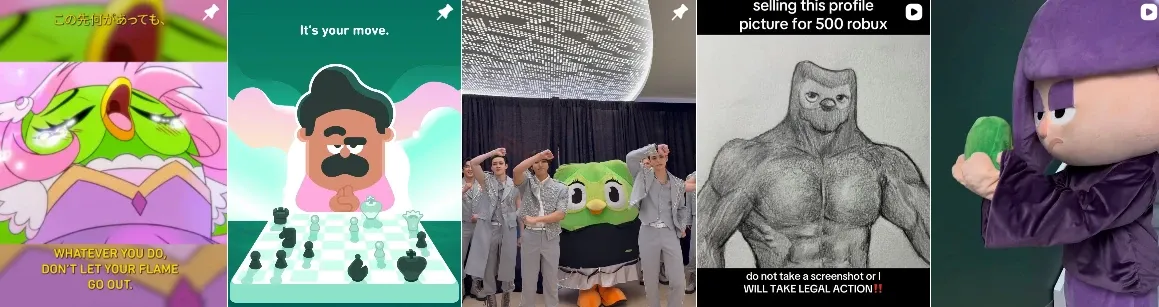
Duolingo has amassed over 4.7 million followers so far.
4 tips to create short-form videos that work
Short-form videos are awesome, but how well they perform depends on how well you make them. Let’s discuss some tips to use when creating one.
Start with a hook that stops thumbs
Adrian Iorga, Founder and President at Stairhopper Movers, sees this same behavior play out in service businesses where attention decides whether a lead ever converts. So, he adopted the hack for shorts on Instagram.
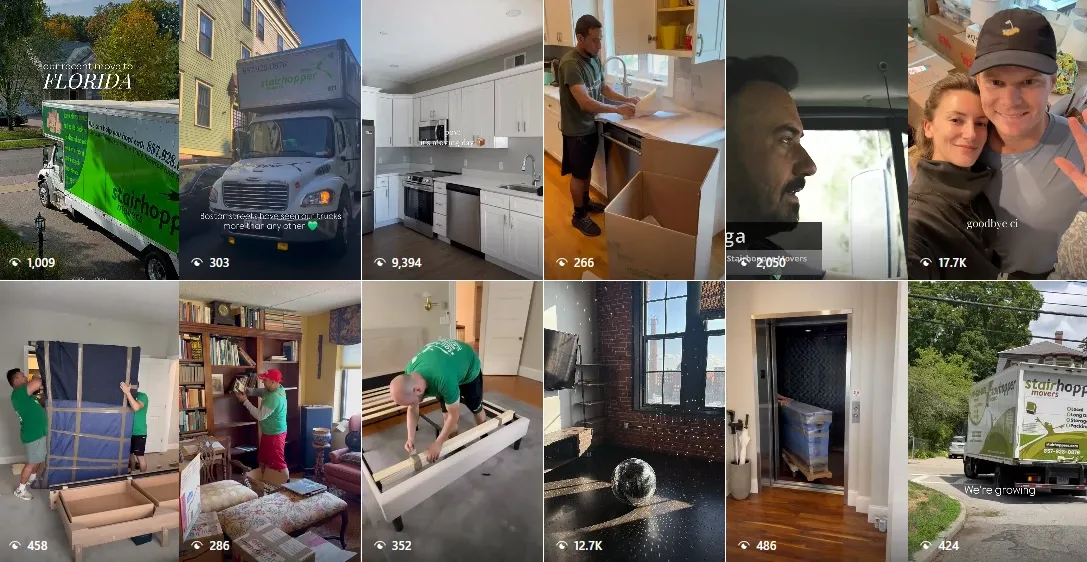
“When we create content on socials, we lead with the focus. You get maybe two seconds before someone swipes. So, lead with the weirdest, funniest, or most surprising moment you have. Setup kills momentum. Open with action, conflict, or the punchline immediately. If the first moment does not create curiosity, the rest does not matter.”
Maintain one idea per video and make it work on mute
People cannot process multiple ideas cleanly inside a short clip. If you are explaining two things, split them into two videos. Clear focus makes the message easier to understand and easier to share.
Assume phones are muted. Captions are mandatory, and your video should still make sense without sound. Text on screen guides the viewer and keeps them watching even when the audio is off.
Keep it short and own your voice
Raihan Masroor, Founder and CEO at Your Doctors Online, sees this clearly in healthcare, where users value clarity over depth at first contact.
“People do not want everything up front. They want enough to decide the next step. And the reason is that bulky information can cause a lot of confusion. On the other hand, short videos give clarity first. Explanation can come later.
“So, create excerpts of your long ideas, turn them into short clips, and put the shorts live first. Then add a link to a longer video which breaks down everything.”
Also, there’s no need to fake your brand or personal voice. Keep it real, remove background noise, and listen to it yourself before hitting the send button.
Learn from the data without obsessing
Check performance, but do not spiral. Drop-offs tell you where interest fades. Low starts point to a weak opening. Learn the lesson, adjust, and move on.
Some videos you believe in will flop, and some throwaway clips will explode. You cannot predict it perfectly. Consistent testing beats waiting for the perfect idea every time.
Conclusion
Short-form video isn't some trend that'll disappear when we get bored. It's more like email or texting, a fundamental way we communicate now.
Start simple. Record yourself talking about something you know well for 10 minutes. Use AI to pull out five interesting moments and turn them into clips. Post them. See what happens and repeat.
Always remember. People give their attention to videos that respect their time. Make something worth 30 seconds of someone's life, and they might give you 30 minutes more.