To create ads for TikTok videos with AI, start by choosing one clear product angle, generating multiple short hooks, turning them into native-style video creatives, and testing variations quickly. The most effective AI TikTok ads feel organic, show the product early, and are built for fast, scroll-stopping engagement.
TikTok has completely changed how ads work. Polished, overly produced videos are no longer what captures attention. Instead, users respond to content that feels real, fast, and native to the platform, even when it’s created with AI.
That’s exactly where AI becomes powerful. Instead of spending days scripting, filming, and editing, you can generate multiple TikTok ad creatives, test different ideas, and scale what works, all in a fraction of the time.
In this guide, you’ll learn how to create high-performing short-form video ads, make them feel like UGC-style TikTok ads, and use AI to streamline everything from hooks to editing to testing.
What are AI TikTok ads?
AI TikTok ads are short-form video ads created with the help of artificial intelligence tools that handle scripting, visuals, voice, editing, or all of them together. Instead of filming everything manually, you use AI to generate faster, test more ideas, and scale what works without slowing down your workflow.
Think of them as regular TikTok ads, but smarter and more efficient behind the scenes.
With AI, you can:
• Generate TikTok hooks in seconds
• Turn ideas into TikTok ad script templates
• Create UGC-style TikTok ads without needing a full production setup
• Produce multiple TikTok ad variations for testing
• Edit and format short-form video ads quickly for the platform
What makes AI TikTok ads so effective is not just speed. It is the ability to experiment. Instead of relying on one creative, you can test different angles, messages, and styles at the same time and see what actually connects with your audience.
At the end of the day, the goal is not to make ads that look like ads. It is to create native-looking TikTok ads that blend into the feed and feel like content people would watch anyway.
Why are AI TikTok ads dominating right now?
AI TikTok ads are taking off because the platform rewards speed, variation, and content that feels native instead of over-produced. In other words, brands are not winning by making one perfect ad. They are winning by making more relevant versions faster, testing what people actually respond to, and adapting before creative fatigue kicks in. TikTok’s own guidance leans in that direction too: the platform recommends introducing the value proposition in the first 3 seconds, prioritizing a strong hook in the first 6 seconds, and using captions or text overlays to keep the message easy to follow.
What makes this especially interesting is that some of the biggest performance drivers are not the obvious ones.
• More creative variety beats one polished “hero” ad: TikTok’s ad testing guide says creative variety sits at the heart of testing, and its 2025 creative research found that 51% of TikTok users prefer brands with a variety of content because it keeps things entertaining. That is exactly why AI is such a strong fit for TikTok creative testing. It helps you generate more hooks, edits, voiceovers, and TikTok ad variations without rebuilding every ad from scratch.
• Entertaining ads do more than get attention. They move people down the funnel. TikTok reports that high-entertainment ads are rated 25% higher for brand love, 15% higher for purchase intent, and 17% higher for likelihood to recommend. That matters because good TikTok ad creatives are not just about stopping the scroll. They also shape how people feel about the brand after viewing.
• Overly polished ads can actually work against you: One of the more revealing TikTok findings is that 59% of TikTok users in a TikTok Marketing Science study said professional-looking brand videos on TikTok feel out of place or odd. That helps explain why UGC-style TikTok ads and more casual, creator-like formats often outperform traditional ad creative. AI makes it easier to create that less polished, more platform-native feel at scale.
• Authenticity is not just a vibe word. It is measurable: TikTok’s analysis of 300+ top-performing creator videos found that high-engagement content tends to ditch rigid scripting, find a natural hook, and stay close to the creator’s own voice. The same research found that 47% of viewers agreed that creator content on TikTok felt authentic, and viewers spend 26% longer watching entertaining ads than low-entertainment-value ads. That is a big reason native-looking TikTok ads do so well. They feel like content first, and second.
• Early branding is not the mistake people think it is: Many marketers still assume they should hide the brand until later. TikTok’s 2025 creative effectiveness research suggests the opposite. Ads with brand recognition in the first 2 seconds generated 57% more happiness and had 19% less attention decay, while well-branded early content saw a 25% increase in brand choice. So yes, you can show the product early and still keep the ad feeling native.
Another reason AI fits TikTok so well is practical. TikTok’s own testing guide says you should test hooks, overlays, sounds, calls to action, and even creator-led content against more polished brand ads. That is a lot of creative demand for one campaign. AI helps reduce the production bottleneck, which means you can spend less time making one version and more time learning which short-form video ads actually convert.
And there is one more layer here that brands often miss: native formats have compounding value. TikTok’s Spark Ads use organic posts and keep the original social features, with views, likes, comments, shares, and follows attributed to the original post. So when your ad feels natural enough to work as real TikTok content, it can build trust and social proof instead of feeling separate from the feed.
That is why AI is becoming such a natural part of TikTok advertising. It is not replacing creative judgment. It is helping brands produce more testable, more native, and more adaptable ads in a format where speed and fit matter as much as the idea itself.
How to create ads for TikTok videos with AI
You create ads for TikTok video with AI by turning one clear idea into multiple short-form creatives using AI for scripting, visuals, editing, and testing. The key is not to rely on one output, but to generate variations, adapt them to TikTok’s native style, and quickly test what performs best.
Here’s a step-by-step process you can actually follow:
1. Start with one clear product angle
Pick one specific message. Not five. Not “everything your product does.”
Focus on one:
• A problem-solution angle
• A quick transformation or result
• A relatable pain point
• A simple product demo
This keeps your TikTok ad creatives focused and easy to understand in the first few seconds.
2. Generate multiple TikTok hooks
Your hook decides whether people stop scrolling or not.
Use AI to create 5-10 variations of:
• Questions
• Bold statements
• Relatable situations
• Curiosity-driven lines
Example:
• “I didn’t expect this to actually work…”
• “Nobody talks about this problem…”
• “This changed my routine in 3 days”
These are your entry points. You will test them later.
3. Turn hooks into short scripts
Now expand each hook into a simple structure:
• Hook (first 2-3 seconds)
• Product shown early
• One clear benefit
• Quick proof or demo
• Call to action
You can use TikTok ad script templates to speed this up, but keep it natural. Avoid over-explaining. TikTok rewards clarity and speed.
4. Create native-looking video creatives
This is where most ads fail. If it looks like an ad, people scroll.
Focus on:
• Vertical format (9:16)
• Fast pacing
• Casual, real-life visuals
• On-screen text to guide the viewer
Using an AI video editor like Async, you can quickly turn scripts into polished but natural-looking videos, adjust timing, and format everything specifically for TikTok without heavy editing work.
5. Add subtitles for sound-off viewing
A big portion of users watch TikTok without sound, especially in public.
That means your message should still work visually.
Adding captions or using an AI subtitle generator ensures your ad stays clear and engaging even on mute, which directly improves watch time and retention.
6. Create multiple TikTok ad variations
Do not stop at one version.
Change:
• Hooks
• First 3 seconds
• Text overlays
• Visual pacing
• Call to action
With tools like Async, you can quickly repurpose one video into multiple TikTok ad variations or even generate shorter clips from a longer version to test different angles without starting from scratch.
7. Test everything inside TikTok Ads Manager
Once your creatives are ready, upload them to TikTok Ads Manager and test them in batches.
Focus on:
• Hook performance (watch time, thumb-stop rate)
• Completion rate
• Click-through rate
The goal is simple. Kill what does not work, scale what does.
8. Iterate fast based on performance
This is where AI gives you a real advantage.
Instead of re-filming or re-editing manually, you can:
• Adjust hooks quickly
• Swap messaging
• Generate new variations in minutes
That is how you move from guessing to learning. And that is how strong short-form video ads are built on TikTok today.
What makes a TikTok ad perform well?
A TikTok ad performs well when it delivers its message fast, feels easy to process, and gives the viewer a reason to keep watching without making the content feel overly “advertisey.” On TikTok, performance often comes from clarity, pacing, and creative freshness more than polished production alone.
One of the biggest non-obvious factors is cognitive ease. TikTok is a fast-scrolling environment, so ads tend to perform better when viewers understand the point almost instantly. TikTok’s own creative guidance recommends making the key message clear early, while research from Meta has also shown that creatives built for mobile work better when branding, product, and message are communicated quickly and simply. In practice, that means your viewer should not have to “figure out” what the ad is about.
Another major performance driver is visual turnover. Ads with movement, cuts, text changes, framing shifts, or quick demo moments tend to hold attention better than clips that stay visually static for too long. TikTok’s creative recommendations repeatedly emphasize dynamic visuals and full-screen vertical design because motion helps content feel more native to the feed. This is especially important for short-form video ads, where even one slow opening can hurt retention.
There is also the issue of creative fatigue, which is one of the biggest reasons performance drops even when the offer itself has not changed. According to TikTok’s testing guidance, creative variety is central to performance testing because audiences respond better when brands show up with fresh content instead of repeating the same asset too long. That is why generating multiple TikTok ad variations is not just a production trick. It is a performance strategy.
Some of the factors that often improve performance the most are not the ones marketers talk about first:
• A visible use case beats vague benefit language: Showing the product in action usually lands better than describing it in abstract terms. That is why product demo ads often work so well on TikTok.
• Slight imperfection can help: Content that feels too scripted or too polished can create distance, while more natural delivery can make the ad feel feed-native.
• Text reduces friction: On-screen text helps viewers follow the message faster, especially during sound-off viewing. TikTok recommends captions and clear overlays for exactly this reason.
• One idea per ad works better than cramming in everything: The more a viewer has to process, the less likely the message is to stick.
• Fast testing improves outcomes: The best-performing ads are often not the first version. They are the result of iteration.
So when you ask what makes a TikTok ad perform well, the answer is not just “good hooks” or “good editing.” It is a mix of fast clarity, native visual rhythm, a focused message, and enough testing to keep the creative from going stale. That is why the strongest TikTok ad creatives usually feel simple on the surface, but are backed by a very intentional testing process.
How to make AI TikTok ads look real?
You make AI TikTok ads look real by prioritizing natural delivery, simple structure, and visuals that match how people actually post on TikTok. The goal is not to hide that AI was used. The goal is to make the content feel like something that belongs in the feed.
Start with a relatable, human entry point
Most real TikTok content does not start with a perfect script. It starts with a moment.
Instead of opening with a polished line, use something that feels casual or slightly imperfect:
• a reaction
• a quick statement
• a relatable situation
This helps your ad blend into the feed before the viewer even realizes it is an ad.
Keep the delivery slightly imperfect
Perfect pacing, flawless cuts, and overly clean visuals can make content feel artificial.
Real TikTok videos often include:
• small pauses or natural speech rhythm
• minor camera movement
• casual framing instead of studio composition
When using AI-generated voice or avatars, avoid making everything too smooth. A bit of imperfection makes the content more believable.
Show the product naturally, not forcefully
Instead of presenting the product like a commercial, integrate it into a moment.
For example:
• using the product during a routine
• showing a quick before-and-after
• reacting to the result
This is why UGC-style TikTok ads tend to perform well. They show instead of telling.
Use text like a creator would
On TikTok, text is not just decoration. It guides attention.
Instead of long captions, use short, clear overlays:
• highlight the key point
• reinforce what is being shown
• keep the viewer oriented
Adding subtitles also makes your content easier to follow, especially for users watching on mute. Using an AI subtitle generator like Async helps you add captions quickly while keeping everything aligned with the video flow.
Match TikTok pacing and structure
Real TikTok content moves fast, but not randomly.
A strong structure usually looks like:
• immediate hook
• early product visibility
• quick progression of scenes or ideas
• clear ending or takeaway
Avoid long intros or slow setups. If nothing happens in the first few seconds, the viewer is already gone.
Use variation to stay believable
One overlooked signal of “fake” content is repetition. If people see the same structure, same tone, and same visuals again and again, it starts to feel manufactured.
Creating small variations helps keep things fresh:
• different hooks
• different opening visuals
• slightly different voice or tone
This is where AI helps a lot. Instead of rebuilding everything, you can generate new versions quickly and keep your ads feeling current.
What is the best AI tool for TikTok ads?
The best AI tool for TikTok ads is the one that helps you move fast, create multiple variations, and keep your content native to the platform. Most tools focus on one part of the workflow, like scripting or video generation, but the strongest ones help you go from idea to multiple ad creatives without slowing down.
Async
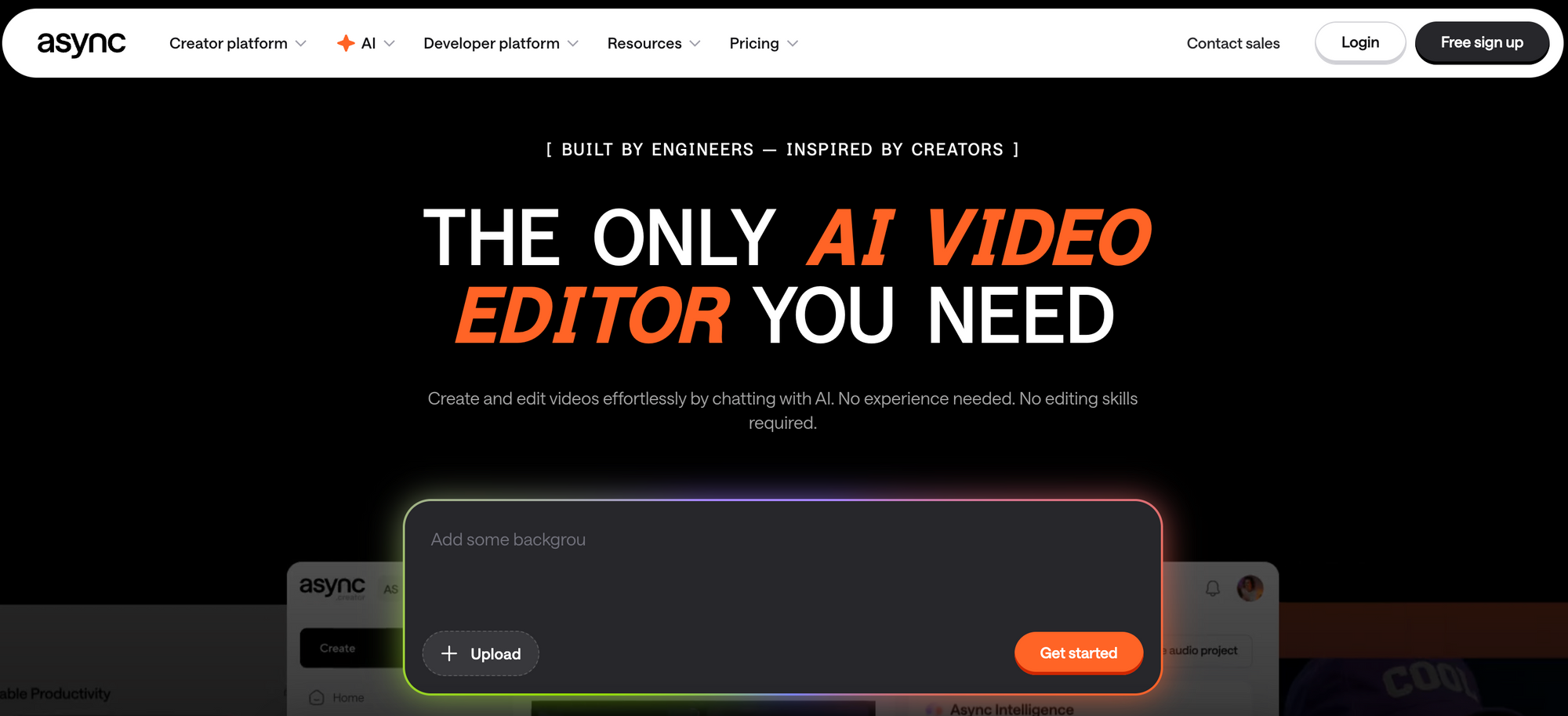
Async stands out because it is built for the full TikTok ad workflow, not just one step of it. Instead of jumping between tools for scripting, editing, subtitles, and formatting, you can handle everything in one place and move from idea to multiple ad creatives much faster.
You can use Async to:
• Turn scripts into ready-to-publish short-form video ads
• Edit videos quickly with an AI-powered video editor optimized for social formats
• Generate and test multiple TikTok ad variations without starting from scratch
• Add subtitles automatically to improve retention and support sound-off viewing
• Reframe and resize videos for TikTok so everything fits the platform naturally
It is especially useful when you are running creative testing. Instead of spending hours producing one version, you can create several variations, tweak hooks or pacing, and iterate quickly based on performance. That is exactly the kind of workflow TikTok rewards.
If your goal is to produce more native-looking TikTok ads, test faster, and scale what works without heavy editing effort, Async is one of the most practical tools to build around.
Creatify
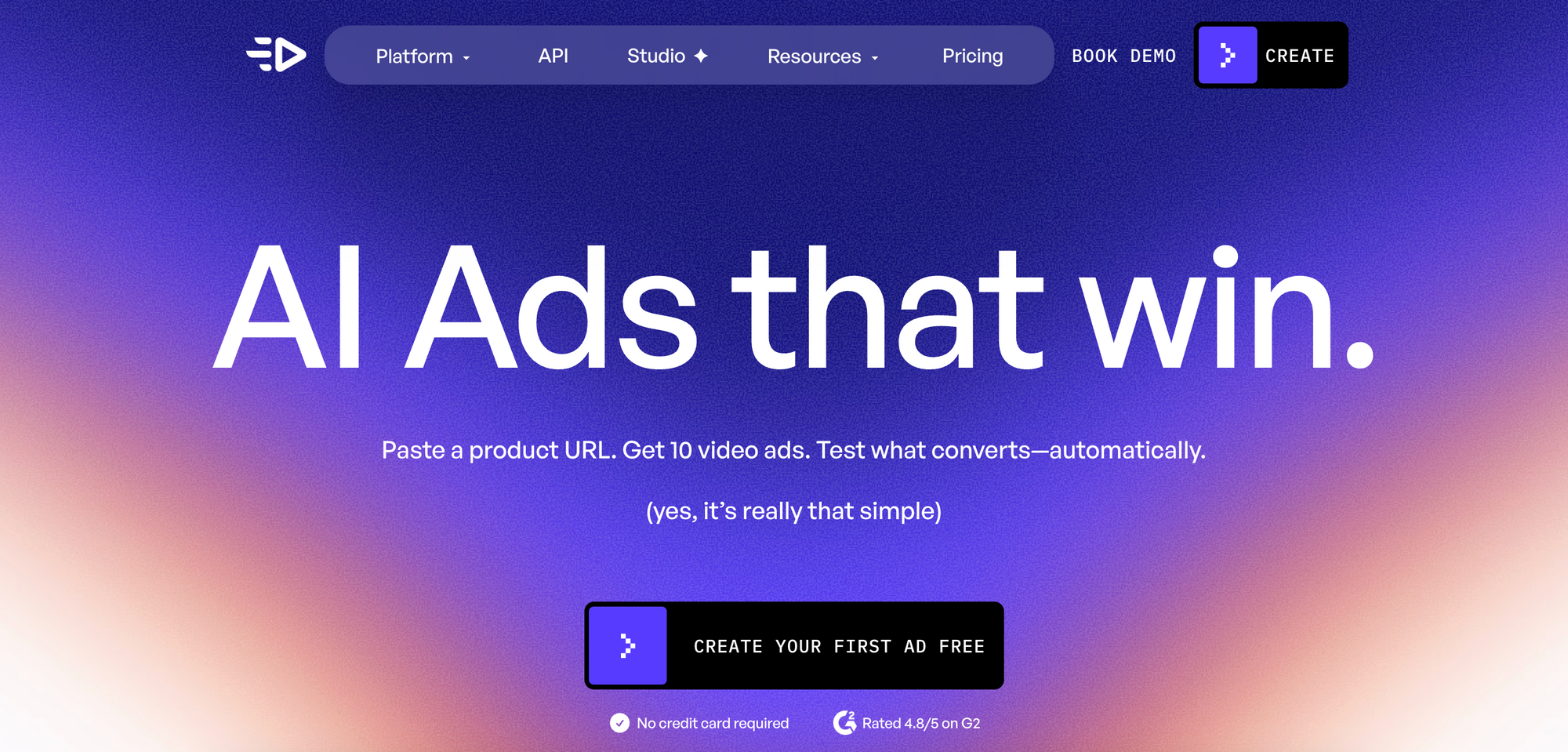
Creatify is built specifically for ad generation. You can paste a product link and generate multiple video ads instantly, including different styles like UGC or more polished formats.
It is a good option when you want:
• Fast TikTok ad creatives from product pages
• Batch generation of multiple ad versions
• Built-in variation testing approach
VEED
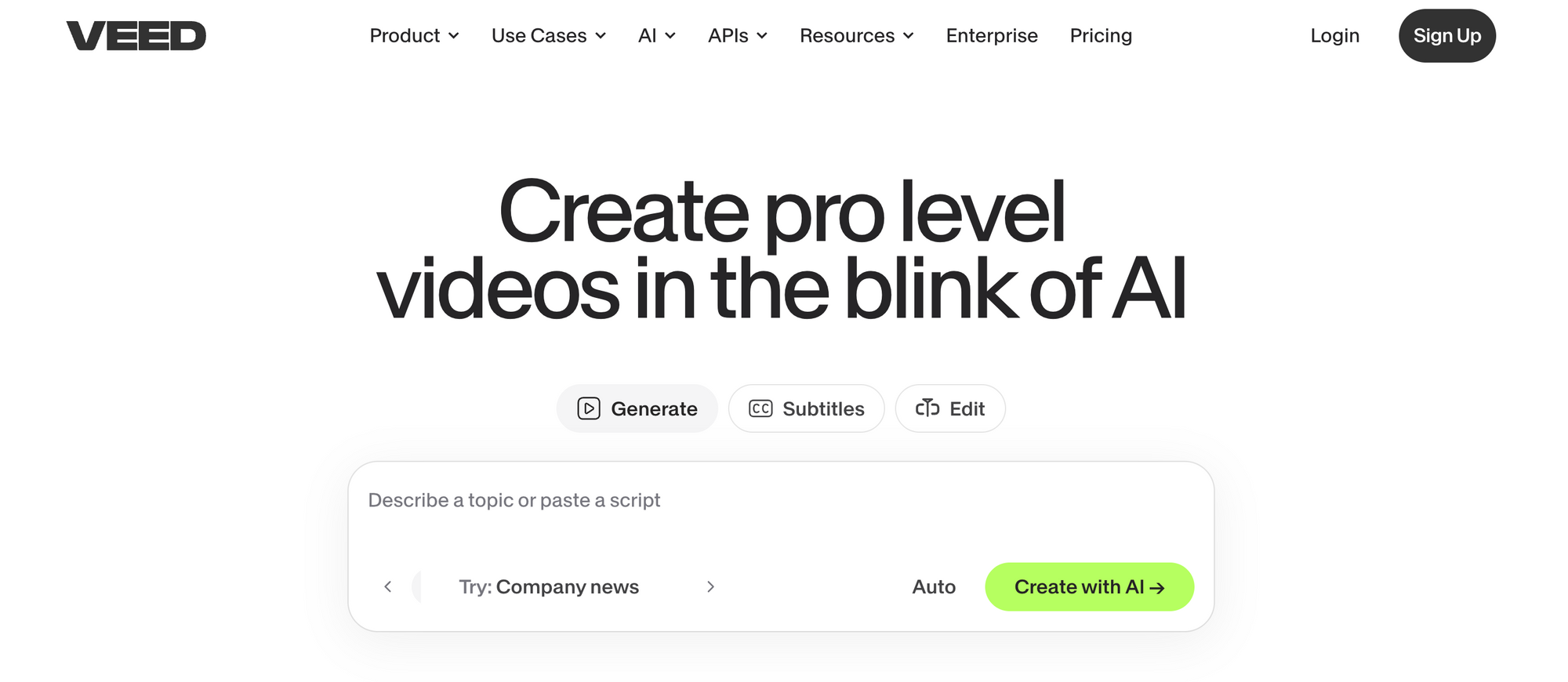
VEED is a widely used AI video editor that helps turn scripts, images, or clips into social-ready videos.
It works well for:
• Editing and formatting TikTok videos
• Adding captions, transitions, and overlays
• Converting raw content into polished ads
It is especially useful if you already have content and want to adapt it into native-looking TikTok ads quickly.
Synthesia
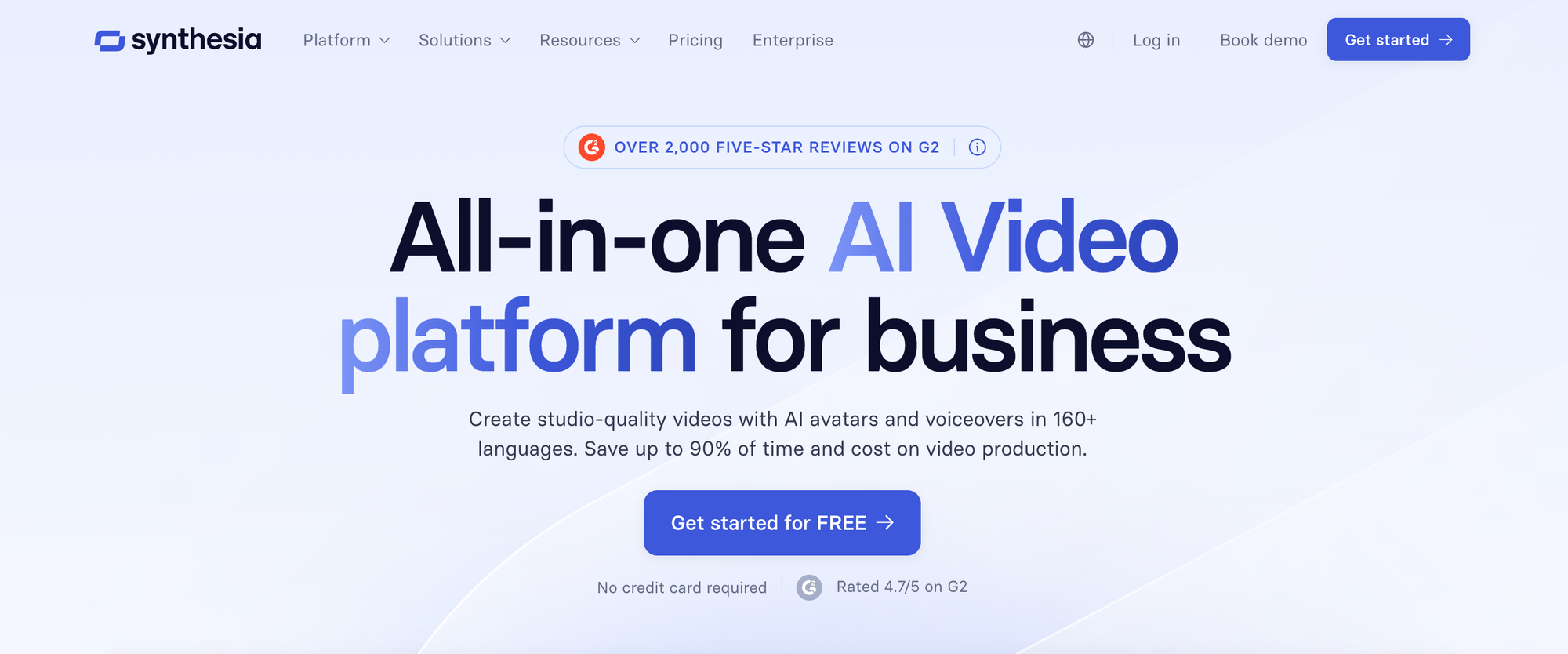
Synthesia focuses on AI avatars and voice-based video creation. Instead of filming, you can generate videos with a digital presenter speaking your script.
Best for:
• Explainer-style or talking-head ads
• Localized content in multiple languages
• Consistent delivery without filming
It is not the most “native TikTok” style by default, but it works well when used carefully with casual scripts.
Canva
Canva has become a strong entry-level AI tool for TikTok ads, especially for quick content creation.
You can:
• Generate videos from text prompts
• Use templates for short-form video ads
• Quickly design and export TikTok-ready creatives
It is ideal if you want something simple and fast without a steep learning curve.
How to create TikTok ads with Async
You can create TikTok ads with Async by starting with a simple idea and turning it into a ready-to-publish video in just a few steps. The process is designed to be fast, flexible, and built for creating multiple ad variations without heavy editing.
Step 1. Start with your core inputs
You only need three things to get started:
• Your brand or product
• A model or style you want to use
• A location or setting for the video
This helps define the direction of your ad before you generate anything.
Step 2. Explore AI models in the video editor
Inside the video editor, you can access 100+ AI models designed for different styles and formats.
These models help you create everything from UGC-style TikTok ads to more structured product-focused videos, depending on the look you want.
Step 3. Choose a model and add your prompt
Once you pick a model, you just need to describe what you want.
Keep your prompt simple and clear:
• what the product is
• what is happening in the scene
• what the key message is
This step replaces traditional scripting and filming, making the process much faster.
Step 4. Let AI generate your video
After you submit your prompt, the AI handles the creation process.
It generates your video based on your inputs, including visuals, structure, and pacing, so you do not need to build everything manually.
Step 5. Export and test your ad
Once your video is ready, you can export it and start testing.
From there, you can:
• create more variations
• adjust hooks or messaging
• repurpose the video into different formats
This makes it easy to produce multiple TikTok ad creatives and iterate quickly based on performance.
Do AI TikTok ads need disclosure?
Yes, AI TikTok ads may require disclosure depending on how the content is created and presented. If your ad includes synthetic media, AI-generated people, voice cloning, or manipulated visuals that could mislead viewers, TikTok expects clear labeling to maintain transparency and trust.
TikTok’s policies around AI-generated ad disclosure focus on one key idea: viewers should not be confused about what is real and what is artificially created. If your content could reasonably be mistaken for real footage or a real person, adding a disclosure is the safer and more compliant approach.
When disclosure is typically needed
You should consider adding disclosure when your ad includes:
• AI avatars or synthetic presenters
• Voice cloning that mimics a real person
• Heavily manipulated or generated visuals
• Content that could be interpreted as real but is not
This is especially important for native-looking TikTok ads, where the goal is to blend into the feed. The more realistic your ad looks, the more important transparency becomes.
What disclosure can look like
Disclosure does not have to be complicated or disruptive.
In most cases, it can be:
• A short label like “AI-generated” or “synthetic content”
• A small on-screen note
• A caption-level clarification
The goal is not to draw attention away from the ad, but to clearly communicate how the content was created.
Why this matters beyond compliance
Disclosure is not just about following rules. It also affects how your brand is perceived.
Clear labeling helps:
• Build trust with your audience
• Avoid confusion or backlash
• Keep your ads aligned with platform policies
As AI becomes more common in TikTok ad creatives, transparency is becoming part of what makes content feel credible, not less engaging.
Common mistakes to avoid
Even strong ideas can underperform on TikTok if execution is off. Most mistakes are not about creativity. They are about how the ad fits the platform.
Here are a few to watch out for:
• Over-polishing the ad: If it looks too much like a traditional ad, people scroll. Native always wins.
• Weak or slow hooks: If nothing happens in the first 2–3 seconds, you lose attention immediately.
• Trying to say too much: One ad should focus on one idea. Too many messages reduce clarity.
• Not testing enough variations: Relying on one creative limits performance. TikTok rewards iteration.
• Ignoring sound-off viewing: Skipping captions or text overlays makes your ad harder to follow.
• Reusing the same creative for too long: Creative fatigue is real. Even good ads stop working over time.
This is how TikTok ads actually win today
Creating TikTok ads with AI is not about replacing creativity. It is about removing the slow parts so you can focus on what actually drives results.
When you create ads for TikTok videos with AI, you are not just producing content faster. You are building a system where you can test ideas, learn quickly, and scale what works without getting stuck in production.
The brands that win on TikTok are not the ones with the biggest budgets. They are the ones that move fast, test constantly, keep their content native, and adapt based on performance.
If you approach TikTok ads this way, AI becomes a real advantage, not just a tool.
FAQs
What are AI TikTok ads?
AI TikTok ads are short-form video ads created using artificial intelligence tools for scripting, visuals, voice, or editing. They help marketers produce and test multiple ad creatives faster while keeping content aligned with TikTok’s native style.
How do you create TikTok ads with AI?
You create TikTok ads with AI by generating hooks and scripts, turning them into short-form videos, adapting them to a native TikTok format, and testing multiple variations. AI is most effective when used to speed up iteration rather than produce a single final ad.
What is the best AI tool for TikTok ads?
The best AI tool depends on your workflow, but platforms like Async stand out because they combine video creation, editing, subtitles, and repurposing in one place, making it easier to scale and test ad creatives.
Can AI-generated TikTok ads convert?
Yes, AI-generated TikTok ads can convert very well when they feel native, communicate the value quickly, and are tested across multiple variations. Performance depends more on creative quality and structure than on whether AI was used.
Do TikTok AI ads need disclosure?
In many cases, yes. If your ad includes AI-generated people, voices, or realistic synthetic content, adding a disclosure helps maintain transparency and aligns with TikTok’s content guidelines.
How long should a TikTok video ad be?
Most TikTok ads perform best between 15 and 30 seconds, but shorter formats can work well if the message is clear and delivered quickly. The key is capturing attention early and maintaining engagement throughout.
Can you make TikTok UGC ads with AI?
Yes, AI can help create UGC-style TikTok ads by generating scripts, voiceovers, or visuals that mimic natural creator content. The key is keeping the delivery simple, relatable, and not overly polished.
What makes a TikTok ad look native?
A native-looking TikTok ad feels like regular content in the feed. It uses fast pacing, simple structure, relatable delivery, and clear visuals instead of polished, traditional ad formats.