You do not need a content team to start marketing your startup. Most founders figure this out later than they should, after waiting for a bigger budget, a dedicated hire, or a quieter week that never comes.
What you actually need is a simple system: a small set of topics you know well, a format you can produce without starting from scratch every time, and a workflow that gets you from idea to published without eating your whole week. Pick a few content pillars, turn ideas into short videos, add captions, repurpose across platforms, and repeat. That is the whole model.
This guide is for startup founders, solopreneurs, and small teams who need to show up online but do not have the time, editing skills, or headcount to produce content the traditional way. We will walk through how to build a lightweight content marketing plan, what to actually post, how to turn one idea into a week of content, and which tools make the process faster without becoming another thing to manage.
What is content marketing for startups and solopreneurs?
Content marketing for startups is the practice of publishing helpful content (videos, posts, articles, and short clips) that attracts your target customers without relying entirely on paid ads. For solopreneurs and early-stage teams, it usually means one person creating content consistently until it starts working.
The goal is not to go viral. It is to show up consistently for the people who are already searching for what you do. A founder who posts two or three times a week about their product category will reach more relevant people over six months than a founder who runs one ad campaign and goes quiet.
Content marketing also compounds. A video, article, or tutorial you publish today can keep driving traffic, leads, and signups for months. But the moment you stop spending on paid ads, so does the traffic. According to DemandSage’s content marketing statistics, content marketing generates over three times as many leads as outbound marketing while costing 62% less
That is why the often-cited CMI stat that content marketing generates over three times as many leads as outbound marketing while costing 62% less still matters for lean teams.
Why you need a simple content system, not a huge content team
Most founders look at brands with polished content and assume a team is behind it. Sometimes there is. But the content that actually performs for startups is rarely the most produced. It is the most consistent.
The real bottleneck for founders is not skill or budget. It has a repeatable system. Without one, content becomes a project you do occasionally when you have extra time, which means you never build momentum.
A simple system has three parts: a small list of topics you will always write or talk about, a format that does not require starting from scratch every time, and a tool that handles the production steps you would otherwise spend hours on. That is it.
According to HubSpot's 2026 State of Marketing Report, small businesses are 23% more likely than average to see ROI from blog posts and content compared to the average business. And 51% of small businesses say they do not incur extra costs on content marketing because they use AI tools. The workflow advantage is real, but only if you build the workflow first.
Content marketing plan for startups and solopreneurs
A content marketing plan does not need to be complicated. For most founders, a one-page plan that you actually follow beats a 40-page strategy document that sits in Notion.
Here is a simple framework that works:
1. Define your audience clearly
This sounds obvious, but most founders skip it. Who is the specific person you are trying to reach? What is their job? What problem are they trying to solve? What do they search for? The clearer your answer, the easier every content decision becomes.
2. Choose 3–5 content pillars
Content pillars are the main topics you will always talk about. A project management SaaS founder might choose remote team workflows, async communication tips, founder productivity, product updates, and customer stories. Every piece of content you create should connect back to at least one pillar.
Keep the list short. Three pillars you cover well are better than eight pillars you cover occasionally.
3. Collect real customer questions
Your best content ideas are already in your inbox and support tickets. What do prospects ask before they sign up? What do customers struggle with in their first week? What do people ask in community groups related to your category? Those questions are search queries. Answer them in your content.
4. Use templates
Starting from a blank page every time is the fastest way to burn out. Templates give you a starting structure: a format for a product demo video, a framework for a short LinkedIn post, and a layout for a tutorial clip. You still fill in the ideas. The structure is already there.
5. Make short videos your default format
Short-form video is one of the highest-ROI content formats according to marketers, with HubSpot listing short-form video as the top ROI-driving content format in its 2026 marketing statistics. You do not need a studio. A good recording setup and a reliable editing tool are enough to produce content that connects. More on this in the Async section below.
6. Repurpose every idea
Do not create the same piece of content twice when you can create it once and reshape it. One video becomes a clip, a caption, a written post, a short article, and a quote graphic. This is where most solopreneurs leave time on the table: they publish once and move on instead of getting five more pieces of content from the same idea.
7. Measure what works, then do more of it
Look at your numbers every two weeks. Which posts got the most engagement? Which videos got the most views? Which content drove signups? Double down on what is working and stop spending time on formats that are not.
Simple content marketing plan template
What should founders and solopreneurs post?
One of the most common questions from founders starting content marketing is, "What do I even talk about?" The answer is usually closer than you think.
Here’s a practical list of content types that work well for startup founders:
- Founder lessons: Short posts or videos on something you learned the hard way. They are specific and honest, not polished and vague, and that’s why they build trust.
- Product demos: Demonstrate how your product solves a real problem. Keep these short and outcome-focused, not feature list-focused.
- Customer Pain Points: Expand on the problem your product solves. If you explain the problem correctly, the right person will feel seen. That’s one of the best things that content can do.
- FAQs: All content that a prospect asks you. Make a short video answering it or write it up and post it. This is useful and search-engine friendly.
- Behind-the-scenes posts: What you are creating, choosing or struggling with. Built-in public content appeals to other founders and builds an audience around your journey, not just your product.
- Educational videos: Teach something useful in your product category A founder building an invoicing tool might post a short video on how to set up payment terms that actually get paid. The content reaches the right audience even before they know about your product.
- Comparison posts: Honest tool or approach comparisons. Because people searching "tool A vs. tool B" are usually nearing the decision-making stage, these tend to rank well for search.
- Quick tutorials: Step-by-step guides on how to do something specific. They work well both as videos and as written posts.
- Keep people updated: Tell us what you shipped, what broke, and what you're working on next. This format has a good community around it, especially on LinkedIn and X. It works because it’s honest, not promotional.
The common thread across all of these: they are genuinely useful, not just promotional. That is what makes content marketing work for small teams. You are building trust before someone is ready to buy, which means when they are ready, they already know you.
How Async helps you create content faster
If you are a solopreneur or a small team, the biggest content production problem is not a lack of ideas. Pairing valuable content with understanding SEO pricing can help founders build a more sustainable long-term marketing strategy. It is execution time. Recording, editing, captioning, resizing, and publishing a single video can take an entire afternoon if you are using separate tools for each step.
Async is an AI-powered video and audio creation platform built to keep those steps connected. Instead of moving between separate tools, founders can use Async as a video editor for recording, editing, captions, clips, and resizing in one workflow. Here is how Async fits into a founder content workflow:
Start from templates and AI models
Screenshot: AI models
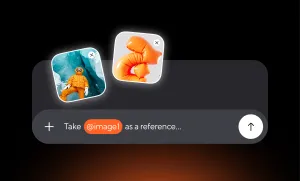
Async gives you access to 100+ AI models for video, image, avatar, music, sound effect, and voiceover generation, so you can create supporting assets or entire scenes without leaving your editing workflow.
Chat-based editing
One of Async's more useful features for non-editors is its chat-based editing workflow. One of Async’s more useful features for non-editors is chat-based editing, because you can describe the edit you want instead of starting every change manually.
This is the practical difference for founders who know what they want, but don’t want to spend an hour in a timeline.
One-step captions and subtitles
Async automatically creates AI subtitles. This is important because many people watch social videos without sound, and captions make it easier to follow the message, quote, repurpose and understand across platforms. Another export, another upload, another login, if you do this in a separate tool. Async keeps it in that same flow.
AI clips
If you record a longer video, interview, or product walkthrough, AI clips can surface the strongest short moments without you manually scrubbing through the full recording. You get a set of clips ready to caption and post, which turns one recording session into multiple pieces of content.
Reframe for every platform
Async's AI reframe converts horizontal video to vertical format automatically. One recording becomes a YouTube video, a Reel, a Short, and a TikTok without manually cropping and resizing for each one.
Audio cleaning
Async's Magic Dust feature removes background noise and cleans up audio in recordings. For founders recording from a home office, this closes the gap between raw recordings and polished-sounding content.
Async is useful because it keeps recording, editing, captions, clips and repurposing all in one workflow instead of having to spread that work across four or five different tools. It's in that consolidation that the time really comes back for a solopreneur managing everything alone.
If you want to start, Async has a free Basic plan that includes unlimited audio recording, multi-track audio editing, Magic Dust AI, and limited video recording/export options.
How to turn one idea into a week of content
This is where most founders leave the most time on the table. They record a video, post it once, and move on. The same idea could have fueled five or six pieces of content with a little more planning.
Here is a practical example. Say you record a 10-minute walkthrough of your product for a new customer. That one recording can become the following:
1. A short clip for TikTok or Instagram Reels (30–60 seconds): Pull the moment where you demonstrate the main value: the before and after, the "here is where it clicks" section. Add captions. Post.
2. A YouTube Short or LinkedIn video (under 60 seconds): Use a slightly different cut focused on a specific outcome the customer gets. LinkedIn tends to respond well to outcome-focused content, especially for B2B tools.
3. A longer YouTube video or LinkedIn post (the full walkthrough): The full recording becomes a long-form piece. Add chapter markers and a descriptive title focused on the search term your customer would use.
4. A written post or LinkedIn article: Summarize the main points from the walkthrough in text. Some people prefer to read before they watch. A written version of the same content reaches a different part of your audience.
5. A caption or Twitter/X thread: Pull three specific things from the video and write them as a short text post. These tend to drive engagement because they are easy to consume and easy to share.
6. A blog section or FAQ answer: If the walkthrough covers a question your customers often ask, the content works as a written FAQ answer or a section in a longer guide. This is how content compounds: a video you made for a customer becomes a blog section that ranks in search.
You can build this kind of system using Async's tools to handle the clip generation, captioning, and reframing: tasks that would otherwise eat the hours between creating the content and actually publishing it. If you want to plan beyond this week, a simple 90-day content strategy can help you turn the same workflow into a three-month system.
Content marketing tools for startups and solopreneurs
The goal here is not to have the most tools; it is to have the right ones for each part of the workflow and as few as possible. The best AI content repurposing tools are the ones that remove steps from your workflow, not the ones that give you another dashboard to manage.
Content production
Async handles recording, editing, captions, AI clips, reframing, audio enhancement, and AI video generation from one place. For solopreneurs who need to produce video and audio content consistently without a production workflow built for teams, this is where most of the work happens.
Writing and scripting
A writing assistant like ChatGPT or Claude works for drafting scripts, outlines, LinkedIn posts, and email newsletters. These tools are fastest when you give them a specific output to produce rather than a vague prompt.
Scheduling and publishing
Tools like Buffer, Later, or Publer handle scheduling posts across platforms. We aim to batch your scheduling so you are not logging into five platforms every day to post manually.
Analytics
Native platform analytics (YouTube Studio, LinkedIn Analytics, and Instagram Insights) provide you with enough data to get a handle on what is working. You don’t need a third-party analytics tool until the volume of your content becomes really hard to manage across platforms.
Design
Canva takes care of most of the static design needs of a solopreneur: thumbnails, quote graphics, and social post templates. The template library is large enough that you rarely have to build from scratch.
The honest advice here is don't give in to the urge to spend a week testing and comparing tools before you publish anything. Start with the simplest configuration that covers your main workflow. Then you can optimize the stack.
Common content marketing mistakes to avoid
Most of these are not about skill. They are about habits and decisions that feel reasonable at the time but slow everything down.
Waiting too long to begin
The biggest content marketing mistake founders make is not starting. There is always a reason to wait: the product is not ready, the brand is not defined, or the website is not finished. None of those things is the real barrier. The real barrier is not yet having a system. Build the system and start publishing.
Trying to post everywhere all at once
Choose two platforms that your target audience actually uses and stick to those first. If you’re trying to cover six platforms before you have a process figured out on one, you’re going to create so-so content everywhere and burn out quickly. Begin with a limited scope. Build when you have momentum.
Making everything from scratch
Templates exist for a reason. A video outline template. A post structure you re-use. A caption format that works for your audience. These are not shortcuts. They’re how you keep a content practice going without it becoming a full-time job.
Ignoring video
Video is still a core marketing channel in 2026. According to Wyzowl’s video marketing statistics, 91% of businesses use video as a marketing tool, and 93% of video marketers see it as an important part of their overall strategy. For solopreneurs worried about the production side, the bar is lower than you think. Consistent and authentic usually beats polished but rare on social platforms.
Not adding captions
Most people scroll with sound off. A video without captions is a video that loses most of its audience in the first two seconds. This is easy to fix. Async generates captions automatically, and it makes a measurable difference in how far your content travels.
Not repurposing content
See the section above on turning one idea into a week of content. Creating the same material from scratch every time is the most avoidable time drain in a founder's content workflow.
Measuring too early or not at all
Give content at least 60–90 days before you judge what is working. One post that underperforms is not a signal. But also do not run for six months without checking your analytics at all; that is how you spend months on a format that is not connecting with anyone.
Start where you are, not where you think you need to be
The gap between founders who have a strong content presence and founders who do not is rarely resources. It is almost always better to have a system than not to have one.
You do not need a production budget, a video editor on staff, or a content calendar that spans three months. You need a small list of topics, a format you can produce consistently, and a workflow that gets from idea to published without eating your whole week.
Async is built for exactly that kind of workflow: record, edit, caption, clip, repurpose, and publish from one place. Whether you are just getting started or trying to turn an inconsistent posting habit into something that actually compounds, it is worth having one tool that handles the production side so you can focus on the ideas.
Start with one video this week, then sign up when you are ready to build the system from there
FAQ
What is content marketing for startups?
Content marketing for startups is the practice of publishing helpful content videos, posts, articles, and clips that attract your target customers without relying entirely on paid ads. For early-stage teams, it usually means building a repeatable system around a small number of content formats and topics, then showing up consistently until it starts compounding. The advantage over paid advertising is that good content keeps driving traffic and leads long after it is published.
How can solopreneurs create content with no team?
The practical answer is templates, AI tools, and repurposing. Templates remove the blank page problem. AI tools like Async handle production steps, editing, captions, clips, and reframing that would otherwise take hours. Repurposing means one recording session produces multiple pieces of content instead of one. Most successful solopreneur content practices are built around batching: setting aside a few hours to record and edit everything for the week, then scheduling it in one go.
What should startup founders post on social media?
The content that tends to work best for founders is specific, honest, and useful, not polished or promotional. Good options include founder lessons learned, product demos focused on a clear outcome, answers to real customer questions, behind-the-scenes build-in-public updates, and short educational videos about your product category. The goal is to create content that would be helpful to your ideal customer, even if they never buy from you. That is what builds the trust that eventually converts.
What are the best content marketing tools for startups and solopreneurs?
The most useful setup for most founders is a video and audio production tool for content creation, a writing assistant for scripts and posts, a scheduling tool for publishing, and native platform analytics.
Async covers the production side, recording, editing, captions, AI clips, reframing, and AI video generation in one workflow, which reduces the number of separate tools you need. For writing, scripting, and ideation, a general AI assistant works well alongside it.
How can AI help with content marketing?
AI helps most in the parts of content creation that are repetitive and time-consuming: generating video clips from longer recordings, adding captions automatically, reframing videos for different aspect ratios, cleaning up audio, generating scripts from a prompt, and turning one piece of content into multiple formats.
AI can also improve content ROI when it helps teams publish more consistently, but for solopreneurs, the bigger win is usually time saved: AI tools can compress hours of production work into minutes.