AI-generated videos will make YouTube Shorts faster to produce, easier to remix, and more competitive. For creators, the impact is mixed: AI can lower production barriers and help creators publish more consistently, but it can also increase low-effort competition, impersonation risks, and viewer trust issues.
The real question is not only whether AI will replace Shorts creators. It is what kind of creator becomes more valuable when anyone can generate a video. The answer is probably not the creator who posts the most. It is the creator who brings taste, timing, personality, judgment, and trust into a feed that is getting much noisier.
What is changing with AI-generated videos on YouTube Shorts?
AI-generated videos are becoming part of the YouTube Shorts workflow itself. YouTube is not only reacting to AI content after upload; it is adding AI tools directly into creation, remixing, disclosure, labeling, and identity protection systems.
AI remixing is becoming native to Shorts
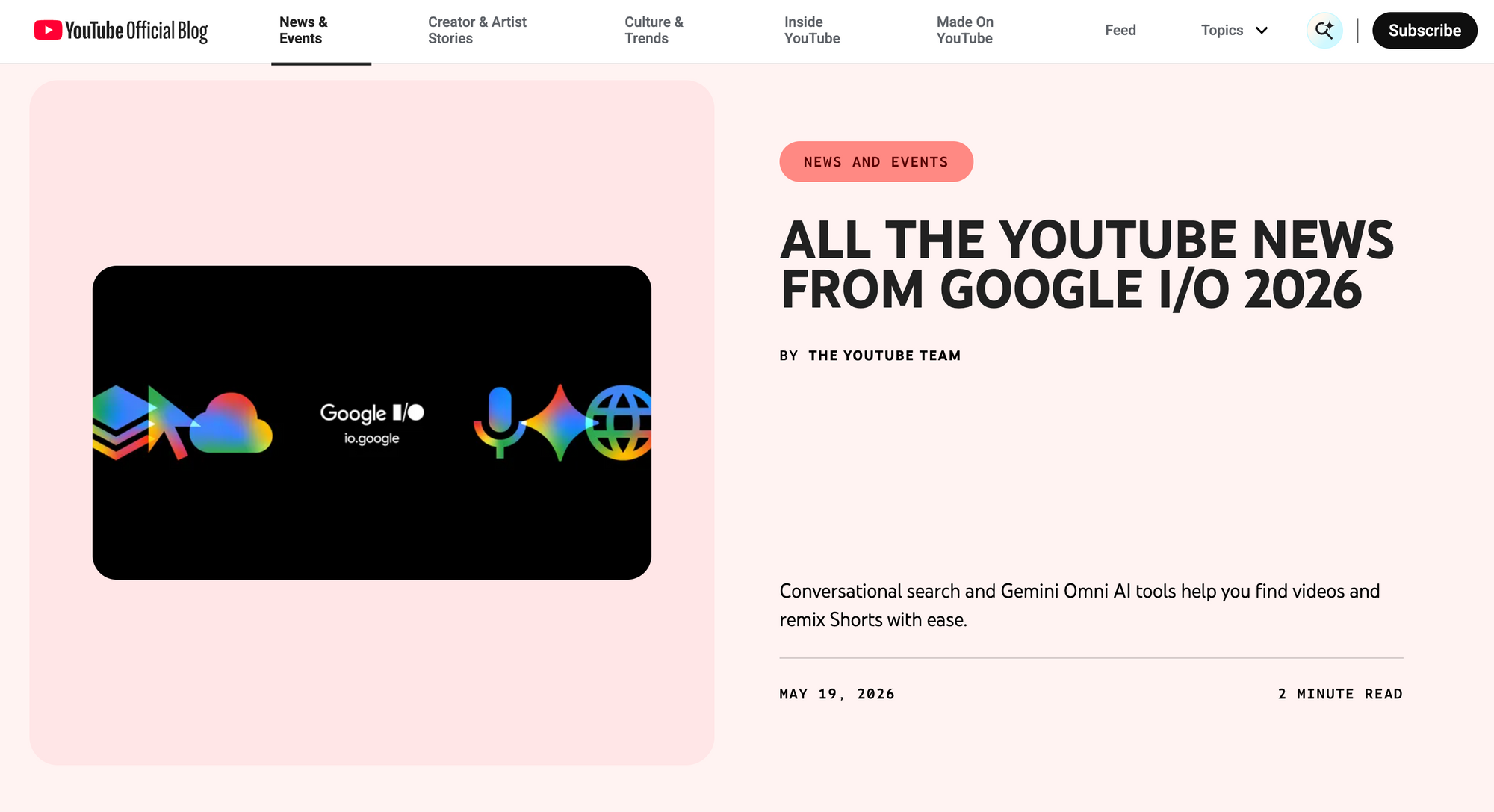
At Google I/O 2026, YouTube announced Gemini Omni for Shorts Remix and YouTube Create. The update lets users transform eligible Shorts using prompts and images, while YouTube says these remixes include digital watermarks, metadata, and links back to the original video. Creators can also disable visual remixing on their content.
That matters because AI video is no longer just a third-party workflow happening outside the platform. YouTube is bringing generative tools into the native Shorts experience, which means AI-assisted remixing could become part of normal creator behavior rather than a niche experiment.
For creators, this creates two pressures at once. Remixing can help an original Short travel further, especially when attribution links back to the source. But it also makes creative control more complicated, because a video can be transformed into a different visual style, scene, or version.
Disclosure and identity tools are becoming part of the platform
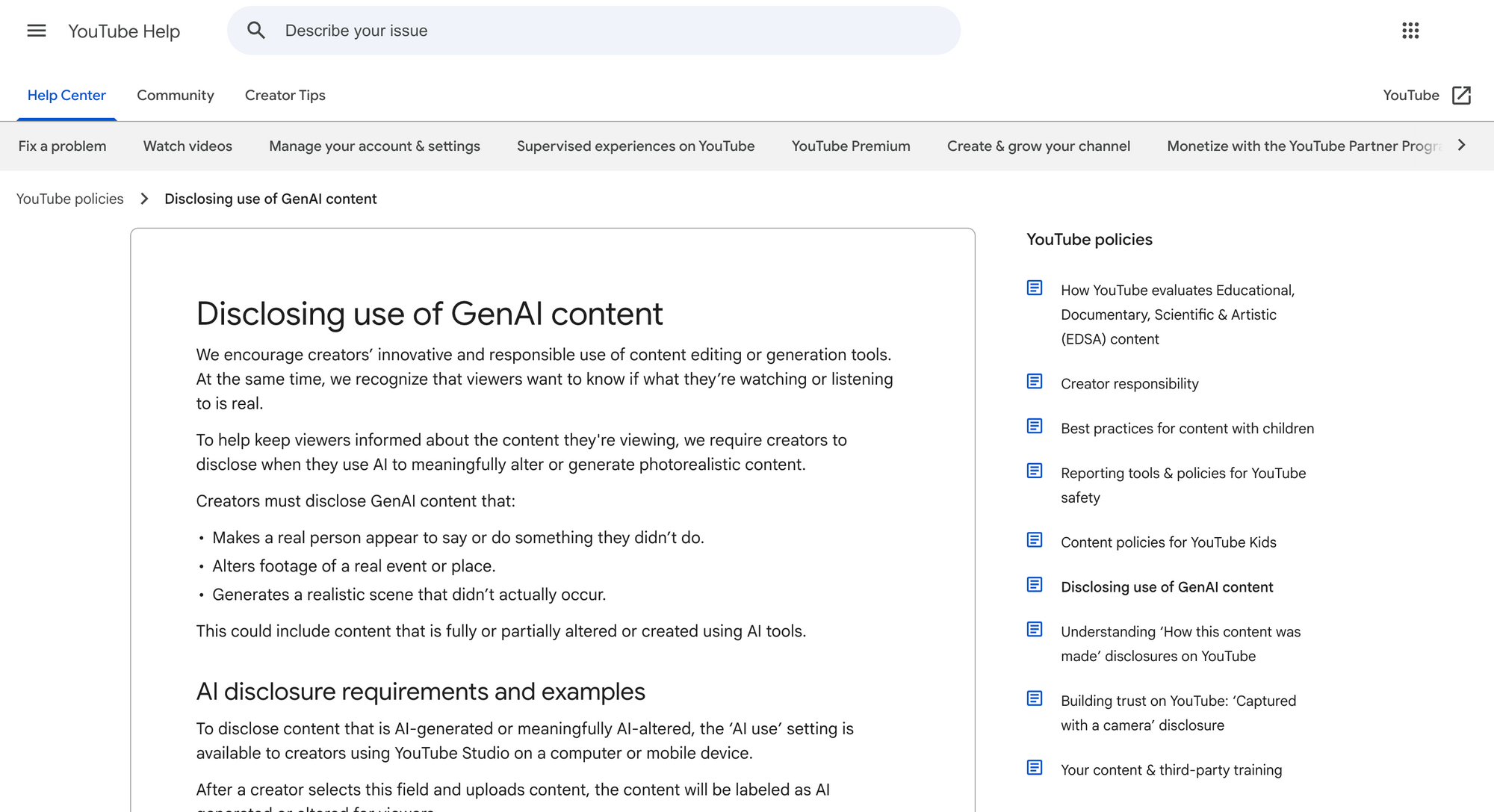
YouTube’s AI strategy is not only about creation. The platform also requires creators to disclose realistic, altered or synthetic content that viewers could mistake for a real person, place, scene, or event. YouTube says disclosure is not required for clearly unrealistic content, animation, special effects, or generative AI used for production assistance, such as scripts or captions.
That distinction is important for creators. A Short that uses AI to draft captions is not the same as a realistic AI-generated video of a public figure saying something they never said. YouTube is trying to separate normal creative assistance from synthetic media that could mislead viewers.
That does not solve every creator's concern, but it shows where the platform is heading: more AI creation tools, more transparency signals, and more pressure on creators to be clear about what viewers are watching.
Why are AI-generated Shorts growing so quickly?
AI-generated Shorts are growing because they reduce the time, skill, and cost needed to produce short-form video. Creators can now generate concepts, animate still images, create voiceovers, edit clips, add captions, test thumbnails, and repurpose longer videos much faster than before.
Before, the hard part was often production: filming, editing, pacing, captions, thumbnails, and formatting. Now, tools like AI clips can help creators pull short, engaging moments from longer videos, while other AI tools can cut, subtitle, and reframe ideas faster.
That does not mean the work becomes effortless. It means the bottleneck changes. Instead of spending all their energy on technical production, creators have to spend more energy deciding what the Short should say, how it should feel, and why someone would keep watching.
For small creators, this can be genuinely useful. Someone with strong ideas but limited equipment can create more. A solo educator can turn one explanation into several Shorts. A marketer can test hooks faster. A faceless channel can build visual formats without hiring a full production team.
The mistake is thinking AI removes the creator’s role. In reality, it moves more of the creator’s role into selection, editing, positioning, and quality control. Output becomes cheaper, but originality becomes harder to prove. If everyone can make “pretty good” videos, pretty good stops being enough.
How could AI help YouTube Shorts creators?
AI can help Shorts creators by removing production friction. It can support ideation, editing, captioning, repurposing, visual generation, localization, and testing, which helps creators move from idea to published video faster.
Shorts is a high-volume format, so creators often need to test several hooks, lengths, formats, and angles before they know what their audience responds to. AI can make that testing cycle less exhausting by speeding up the technical parts of the workflow.
For example, AI can help turn long videos into short clips, draft hooks, create subtitles, clean audio, reframe horizontal videos vertically, generate visual variations, and speed up rough cuts. This is where the best AI video editor fits naturally into the creator workflow: not as a replacement for judgment, but as a way to reduce repetitive editing and packaging work.
A tool like Async fits into this shift because it helps creators handle the practical editing layer, clips, captions, reframing, and repurposing, while the creator still controls the angle and final creative decision.
AI may also help creators who were previously blocked by production limitations. A creator with strong commentary skills but no editing experience can now make better-paced clips. A small business can create explainers without a studio day. A multilingual creator can adapt content across languages more easily.
The positive side is clear: AI can make Shorts creation more accessible. The risk is that accessibility also invites mass production. More output only helps when the creator has a clear reason for people to come back.
How could AI hurt YouTube Shorts creators?
AI could hurt Shorts creators by flooding the feed with low-effort videos, making content feel more repetitive, increasing competition, and making viewers more skeptical. The issue is not that all AI content is bad. The issue is that low-effort AI content can now be produced at scale.
This is where the “AI slop” conversation becomes important.
Kapwing’s AI slop report found that, in a test of the first 500 YouTube Shorts shown to a new account, 21% were categorized as AI slop and 33% as brainrot. Kapwing also reported that 278 fully AI-generated channels had generated 63 billion views, 221 million subscribers, and an estimated $117 million in annual revenue.
The Guardian covered the same findings, framing them as a sign that AI-generated low-quality content is already visible in new-user YouTube recommendations.
For context, Kapwing’s test was based on a new-user Shorts feed and social-data estimates, so it should not be read as a measure of all YouTube content. But it does point to a real platform problem: AI makes low-effort content cheap enough to produce at scale.
For creators, that means the feed gets more crowded. A creator making thoughtful Shorts may now compete with channels producing dozens or hundreds of synthetic clips around trending formats, children’s content, animal content, fake stories, celebrity-style clips, or repetitive visual loops.
That can make discovery harder. It can also create audience fatigue. When viewers see too much generic AI content, they may become quicker to skip anything that looks synthetic, even when a real creator used AI responsibly.
What do the studies actually tell us about AI and Shorts?
The research does not prove that AI-generated Shorts will automatically outperform human-made Shorts. What it does show is that Shorts recommendations can favor entertainment-friendly content, labels can affect perception without necessarily changing engagement, and synthetic video detection still has technical limits.
Shorts research suggests entertainment-friendly content can travel
A 2025 study on YouTube Shorts recommendation behavior analyzed 685,842 Shorts across three content domains. It described Shorts as serving more than 2 billion monthly users and found recommendation drift away from politically sensitive content toward entertainment-focused videos. The study also found a preference for joyful or neutral content and disproportionate promotion of highly viewed and liked videos.
This is useful, but we should not overstate it. The study does not compare human-made Shorts with AI-generated Shorts. It studies recommendation behavior, topic drift, emotional tone, and engagement signals.
The implication is still relevant. If Shorts tends to reward entertainment, simplicity, positive or neutral emotional tone, and existing engagement, AI-generated content can be engineered around those patterns. That may help explain why formulaic AI content can travel, even when it feels shallow.
The opportunity for real creators is to understand the mechanics without becoming mechanical. A human creator can still use pacing, emotion, and format design strategically. The difference is that the content needs a point of view, not just the shape of an engaging Short.
AI labels may inform viewers without changing engagement
A 2025 CHI paper on synthetic content labels tested 10 warning label designs with 911 participants. It found that labels significantly affected whether users believed content was AI-generated, deepfaked, or edited by AI. But labels did not significantly change engagement behaviors like liking, commenting, or sharing.
That is a useful trust nuance. Labels may help people recognize AI content, but recognition does not always change behavior. A viewer can know something is AI-generated and still watch it because it is funny, strange, emotional, or satisfying.
For creators, this means trust will not come only from labels. It will come from consistency, transparency, voice, community, and the feeling that there is a real person behind the content.
What happens when AI copies a creator’s likeness?
AI creates a new identity risk for Shorts creators because a creator’s face, voice, style, and public image can be copied or simulated. This is especially serious for creators whose trust depends on personal presence, expertise, or audience relationships.
YouTube’s Gemini Omni announcement also notes that likeness detection is expanding to all creators 18 and older. This matters because likeness misuse can take several forms: someone could use a creator’s face in a fake endorsement, imitate their authority, or generate a video that makes them appear to say something they never said.
Even a harmless-looking parody can become harmful if viewers cannot tell what is real. And because Shorts move quickly, a misleading video may be viewed, shared, downloaded, or reposted before the creator has time to respond.
Likeness detection helps, but it is not a complete solution. It will not catch everything, especially when videos are cropped, compressed, reposted, or stylized.
That means creators need to think about identity protection as part of their content strategy, not only as a platform moderation issue.
Clear branding, consistent voice, official channels, visible disclaimers, and quick audience communication may become more important as synthetic media improves. In a feed with more AI-generated content, being recognizable becomes a form of protection.
Will AI-generated Shorts make creators more money?
AI-generated Shorts can help creators test more ideas and reduce production costs, but more output does not automatically mean more money. Monetization still depends on originality, audience retention, eligibility, advertiser value, and whether YouTube sees the content as authentic rather than mass-produced.
This is where many creators get the wrong idea. They think AI makes money because AI helps them post more. But Shorts revenue is not only about volume, and it is definitely not about subscriber count alone. That matters even more when people misunderstand how much YouTube pays per subscriber versus how YouTube actually monetizes views, ads, engagement, and channel eligibility.
YouTube’s July 2025 update to its channel monetization policies clarified that repetitive or mass-produced content falls under “inauthentic content” and remains ineligible for monetization. YouTube says this type of content has always been ineligible under policies that reward original and authentic content.
That does not mean AI content is banned. It means low-effort, repetitive, mass-produced content is risky. An AI-assisted Short with a clear idea, original commentary, meaningful editing, or a real creative purpose is very different from a channel pumping out templated synthetic videos with little transformation.
The better question is not “Can AI Shorts be monetized?” It is: does this Short add enough original value that viewers and YouTube can recognize it as authentic content?
If the answer is yes, AI can help creators produce more efficiently. If the answer is no, AI may simply help them make more content that earns less trust.
Where human Shorts creators still have an advantage
Human Shorts creators still have an advantage in taste, context, personality, judgment, lived experience, and audience relationship. AI can generate content patterns, but it does not automatically understand why a specific audience cares, what feels overdone, or when a small detail makes a video feel real.
This may become the most important creator shift.
When AI tools were less accessible, production quality helped creators stand out. Good editing, captions, visuals, and thumbnails were advantages because not everyone could do them well.
Now those things are easier to automate. A creator can generate captions, test hooks, compare CapCut alternatives, and build a more flexible short-form workflow without starting every asset manually.But automation does not replace taste. It only gives creators more options to filter, refine, and reject.
That does not make skill irrelevant. It changes which skills matter most.
Creators will need better taste. Better filtering. Better positioning. Better emotional timing. Better audience understanding.
AI can give you ten hook options. It cannot always tell you which one sounds like you. AI can generate a thumbnail. It cannot always know which expression feels honest instead of clickbaity. AI can animate a concept. It cannot guarantee the concept is worth watching.
The creators who benefit most will probably be the ones who use AI to remove busywork while keeping control of the creative direction.
What should YouTube Shorts creators do now?
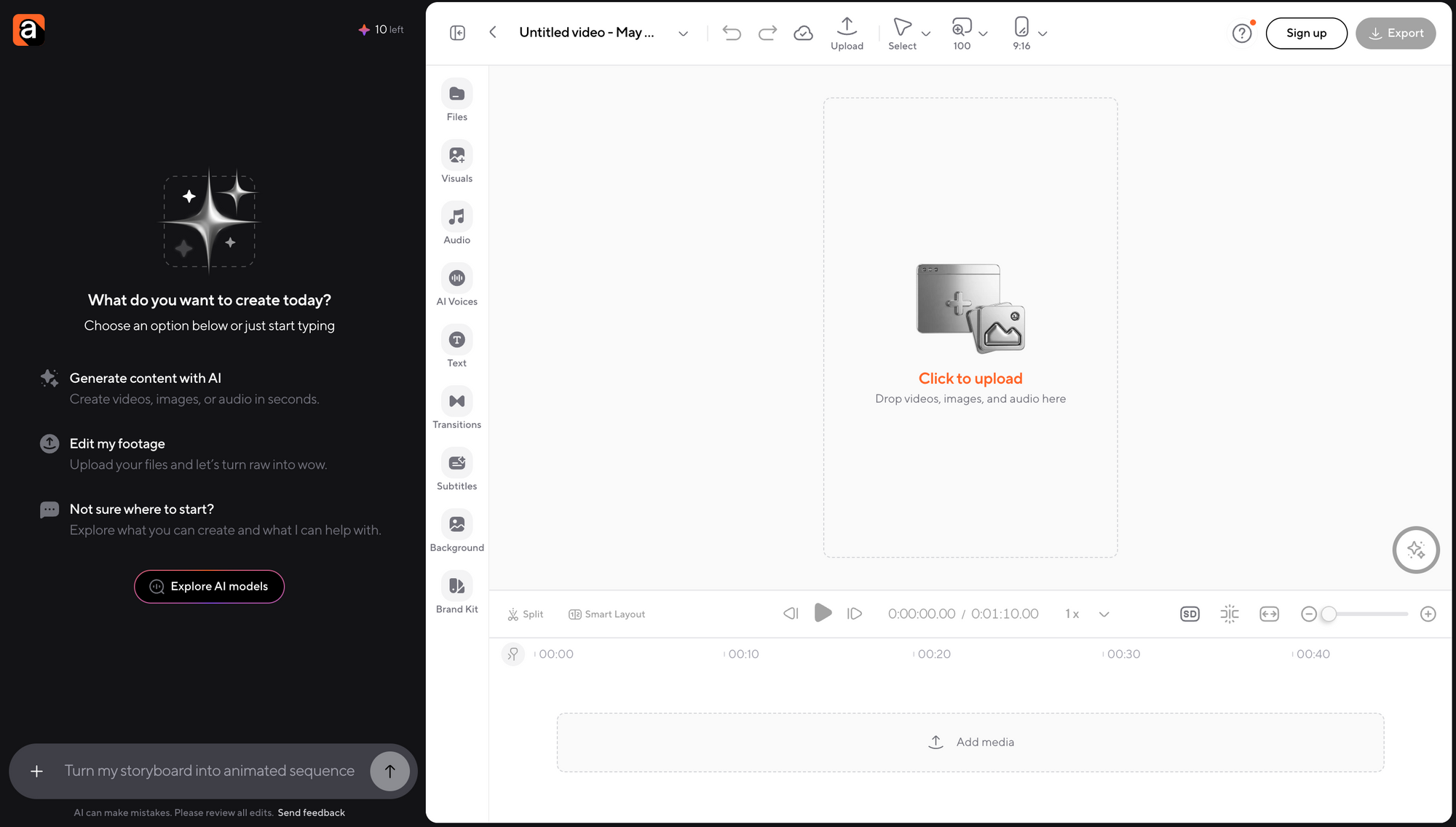
Shorts creators should use AI as workflow support, not as a full creative strategy. The safest path is to use AI for speed, editing, packaging, and testing while keeping the concept, judgment, voice, and audience relationship human.
Start with production friction. Let AI help with captions, drafts, edits, reframing, repurposing, thumbnails, and visual experiments. For example, creators can use Async to speed up the practical parts of Shorts production, such as editing, captions, reframing, and repurposing, while keeping the creative direction human.
Then keep the idea human. Start with a real opinion, story, insight, demonstration, or experience. AI should support the point, not become the point. If the Short feels like anyone could have generated it, it probably has weak creator value.
Creators should also build stronger human signals. That can mean a recurring format, a consistent point of view, a familiar on-camera style, or a clear promise to the audience. A creator can generate captions, test hooks, compare CapCut alternatives, and build a faster workflow, but automation still needs taste.
AI can also help creators stretch existing material further. A product photo, campaign visual, or educational graphic can become a simple motion-based Short, which is where learning how to animate images with AI can support creators who do not always have fresh footage to work with.
Creators should also disclose realistic synthetic content when needed. If viewers could mistake something AI-generated for a real person, place, scene, or event, treat disclosure seriously. That is not only about policy; it is about protecting trust.
The bigger strategic shift is this: creators should stop thinking of AI as a shortcut to more content and start thinking of it as a way to protect more time for better decisions.
So, what should Shorts creators take away from all this?
AI-generated videos will impact YouTube Shorts creators by making content faster to produce, easier to remix, and harder to evaluate at scale. For creators, that creates both an opportunity and a trust problem.
The creators most likely to benefit will be the ones who use AI to move faster while still giving viewers something specific, recognizable, and trustworthy. That is the healthier way to think about tools like Async too: not as a shortcut to generic volume, but as a way to spend less time on repetitive production work and more time shaping the idea.
In other words, AI may change how Shorts are made, but it does not remove the need for a creator worth watching.
FAQ
Does YouTube allow AI-generated Shorts?
Yes, YouTube allows AI-generated and AI-assisted Shorts, but creators may need to disclose realistic altered or synthetic content. YouTube’s rules focus on content that could mislead viewers into thinking a realistic person, place, scene, or event is real.
Can AI-generated Shorts be monetized?
AI-generated Shorts may be monetized if they meet YouTube’s originality, authenticity, and monetization rules. Mass-produced, repetitive, or low-effort content is risky because YouTube flags it as inauthentic and ineligible for monetization.
Will AI replace YouTube Shorts creators?
AI is unlikely to replace all Shorts creators, but it will change what makes creators valuable. As production gets easier, personality, trust, taste, storytelling, editing judgment, and audience connection become more important than simply posting more videos.
Do viewers care if Shorts are AI-generated?
Some viewers care, especially when AI content feels deceptive, low-quality, or impersonates real people. But research on synthetic labels suggests that even when labels affect whether people recognize AI content, they may not significantly change liking, commenting, or sharing behavior.
Can AI help with YouTube Shorts thumbnails?
Yes, AI can help creators test thumbnail directions faster, especially when they need a clearer visual promise for a Short. An AI thumbnail generator can support packaging, but the creator still needs to choose the image that feels accurate and worth clicking.