A new year has a funny way of exposing what’s no longer working. The habits that once felt productive start to feel heavy, your tools don’t quite talk to each other, and suddenly creating content takes twice as long as it should. If your workflow feels more complicated than creative, that’s not a motivation problem, it’s a system problem.
A content creation workflow is the process behind how ideas move from “we should post this” to being published, distributed, and actually seen by the right people. It’s how teams plan, create, review, publish, and repurpose content across channels. And as the way people discover content continues to shift, through AI search, private sharing, and multi-platform consumption, the workflows behind that content need to evolve too.
In this article, we’ll look at what no longer deserves a place in your workflow as we head into 2026. From outdated distribution habits to approval bottlenecks and visibility myths, we’ll break down what to drop and what to rethink, so your content process is faster, smarter, and built for how content actually works today.
Common pitfalls in content creation workflows
Most workflows don’t “break” because the team lacks talent. They break because content has become a high-volume, high-stakes operation… and the process running it is still held together with tribal knowledge, scattered docs, and good intentions.
Two big forces make this worse going into 2026:
• More content, more channels, more coordination: HubSpot reports that 90%+ of marketers are maintaining or increasing investment in content marketing in 2025, which usually means more output, not necessarily more time.
• More tools, more handoffs: Content operations are the behind-the-scenes system of planning, creating, managing, and delivering content at scale. When that system isn’t solid, everything downstream gets expensive.
Here are two pitfalls that look “small” on paper, but quietly wreck timelines, consistency, and results.
1. Lack of documentation
If your workflow lives in people’s heads or is buried in Slack threads, you don’t really have a workflow, you have a fragile chain of memory.
What this causes and why it’s sneakily expensive:
• Hidden rework loops: People redo work because they don’t know the latest rules (tone, SEO requirements, legal constraints, brand do/don’t). That rework rarely gets tracked, so teams underestimate how much time it’s eating.
• Version chaos: Without a clear “source of truth,” feedback happens across docs, email threads, comments, and DMs, so people implement conflicting changes or miss the final decision.
• Bottlenecks outside the content team: One non-obvious failure point: stakeholders outside content often don’t understand the governance/constraints content teams work under, so they introduce friction unintentionally.
• No repeatability: The painful part is the fact that you can’t reliably replicate what worked because the steps weren’t captured.
The “tell” that you’re under-documented isn’t just missing SOPs. It’s when your team keeps asking the same questions: What does “final” mean? Who approves this? Where do assets live? Which brief template is current? What’s our publishing checklist?
Inconsistent content strategy development
Even strong teams get stuck when strategy changes depending on who asked, what channel it’s for, or how urgent it feels. And inconsistency doesn’t just show up as off-brand content, it shows up as random effort that doesn’t compound.
Here’s the data-backed reason this matters: Content Marketing Institute has reported that the most successful content marketers are far more likely to have a documented content marketing strategy (65% vs. 14%), which is basically the difference between “we’re aligned” and “we’re guessing.”
What inconsistency looks like in real life and why it’s not obvious at first:
• Content that can’t be repurposed: If pieces are created without a common positioning and structure, they don’t remix well into multi-channel assets later, so you keep starting from scratch.
• Metrics that don’t match intent: Teams measure traffic on content meant for trust, awareness, or pipeline, then “optimize” in the wrong direction and accidentally weaken the strategy.
• Capability gaps get exposed: Gartner research cited in a content operations fact sheet notes 58% of CMOs report their teams lack capabilities needed to execute strategy, often showing up as scattered execution and inconsistent priorities.
Five things to drop in 2026
Before we get into the specifics, here’s the big picture: the way content gets found and shared has shifted faster than most teams’ playbooks. What worked in 2022 or even 2024, centralized posting routines, manual distribution methods, and visibility metrics anchored only in public platforms, is now costing teams time, attention, and real impact. In 2026, workflows need to meet how audiences actually discover, share, and use content, not just how platforms tell us to track it.
1. Neglecting multi-channel content distribution
Multichannel content distribution isn’t just “posting everywhere”; it’s a strategic orchestration of where, when, and how content meets audiences. A piece of content can’t thrive if it lives in a silo, but many teams still think distribution ends with scheduling a LinkedIn post and hoping for the best.
Here’s why ignoring thoughtful multi-channel distribution is a costly mistake:
Audiences are fragmented
People don’t live on one platform anymore. They browse TikTok for entertainment, Twitter for news bursts, email newsletters for curated depth, and private messages for peer-to-peer recommendations. A distribution strategy tied to only a couple of channels leaves large segments of your audience untouched.
Different channels demand different formatting
A long-form article doesn’t perform the same way on Instagram Reels, LinkedIn long posts, or email newsletters. Each channel has its own optimal structure and expectations, and failing to tailor content costs engagement. Effective distribution treats each channel as a distinct touchpoint, not just another checkbox.
Manual distribution eats time
Without workflows and tools to automate distribution, teams manually customize, optimize, and schedule posts across platforms. That eats hours per week, and it’s avoidable. Content teams that embrace cross-channel automation can maintain brand consistency while reducing repetitive tasks.
What research says
• A strategic distribution plan is a core component of effective content marketing, not an afterthought. Strong plans include audience segmentation, repurposing paths, and performance feedback loops across platforms.
• Teams that don’t optimize for multi-channel reach often miss how audiences actually engage with content, especially beyond owned social pages.
2. Why this matters more than ever in 2026
It used to be that engagement on public social platforms was a rough proxy for content performance. But that’s no longer true. People are moving behind the curtain to private sharing spaces, niche communities, and immersive formats that standard posting models don’t account for.
If your distribution workflow assumes “create, post, check engagement dashboard,” you’re operating with outdated signals and missing where the real attention lives.
3. Overcomplicating the approval process
Overbuilt approval chains don’t just slow content down, they quietly turn your workflow into “work about work.” Asana’s research found that knowledge workers spend around 60% of their day on coordination instead of the skilled work they were hired to do. When approvals sprawl, content teams feel that tax immediately.
What’s not-so-obvious is where the damage actually comes from:
• Decision ambiguity, not disagreement: The bottleneck often isn’t “people disagree,” it’s “no one knows who has the final call.” HBR’s classic “Who Has the D?” argues that speed and execution improve dramatically when decision roles are explicit. Without that clarity, feedback cycles multiply.
• High-status pile-ons can reduce group effectiveness: More senior reviewers can unintentionally make groups less effective (people self-censor, avoid sharp opinions, or over-edit to reduce risk). Harvard Business School research describes how status dynamics can undermine group performance.
• Every added approver increases “version surface area”: More reviewers means more parallel comment threads, more interpretations of “final,” and more chances the team merges conflicting edits, which is why “review” often becomes rework.
A quick gut-check, the stuff that usually signals “approval bloat”:
• You’re getting late-stage edits that change the angle, not the wording
• Approvals happen in multiple places (doc comments + email + Slack)
• The same stakeholder “just wants to see it” on every asset, regardless of risk
• Content misses the moment because it’s waiting on one last sign-off
The fix in 2026 is smarter checks: define who decides, limit inputs to the people who truly reduce risk, and match approval depth to content type (e.g., lightweight social ≠ product claims ≠ legal-sensitive). That’s how you keep quality and velocity.
4. Staying in comfort zones with content types
One of the fastest ways to stall a content engine is to keep producing the same format because it’s familiar. The trap is that it still feels productive, your team ships, but performance plateaus because audience behavior and platform incentives shift underneath you.
A few signals from the last year make this hard to ignore:
• Short-form video keeps dominating ROI in marketer surveys: HubSpot’s 2025 State of Marketing highlights short-form video as one of the highest-ROI formats, and HubSpot’s own marketing stats roundup cites 21% of marketers saying short-form video delivers the highest ROI.
• But “just make it short” isn’t enough anymore: Wistia’s State of Video insights note that overall video engagement dropped 7% in 2024 (their largest dip in four years), which is a strong hint that audiences are raising the bar, and repetitive formats are easier to ignore.
What’s not obvious is why comfort zones hurt workflows, not just outcomes:
• You build a one-format pipeline that can’t adapt: If your process is optimized for “blog → publish,” you’ll struggle to repackage insights into formats that actually travel (short clips, email-first versions, community posts, Q&A snippets).
• You mistake efficiency for effectiveness: Producing faster in a single format can be a productivity win… while still losing attention to where your audience is spending time.
• You under-serve “answer-first” discovery: Google’s guidance emphasizes creating helpful, reliable, people-first content, often meaning clearer structure, direct answers, and formats that make information easier to consume.
Here are a few practical “comfort zone tells” to watch for (and they’re workflow issues as much as creative ones):
• You repurpose by copy-pasting, not by reformatting
• Your content calendar is 80% one format because it’s the only one your workflow supports
• Experiments happen “when we have time” (so… never), instead of being baked into the workflow
• Performance dips and the only response is “publish more,” not “ship differently.”
Dropping the comfort zone in 2026 doesn’t mean chasing every trend. It means designing a workflow that can repackage value into multiple formats on purpose, so your best ideas aren’t trapped in one container.
5. Chasing clicks instead of “being the answer” in AI search
If your workflow is still optimized around CTR tricks and traffic spikes, it’s fighting the current. Discovery is shifting toward answers shown directly in the SERP and questions handled inside assistants, which means a growing share of “wins” won’t look like a click anymore.
A few data points that change how you should think about this in 2026:
• Traditional search volume is projected to drop 25% by 2026 as people use AI chatbots/agents for answers instead of classic search.
• In the U.S., 58.5% of Google searches resulted in zero clicks in SparkToro’s 2024 study, meaning most searches ended without anyone visiting a website.
• Separate clickstream reporting shows zero-click behavior rising (e.g., 27.2% of U.S. searches ending without a click in March 2025, up from 24.4% a year earlier), while organic clicks declined.
So what’s the non-obvious workflow problem? When you chase clicks, you often design content that’s hard for AI systems (and skimmers) to extract value from, even if it’s well-written.
Here’s what “click-chasing” usually looks like inside workflows and why it backfires now:
• Curiosity-first intros that delay the answer, great for old-school blog engagement, bad for “answer engines”
• Keyword mapping without intent mapping, you rank for a phrase, but don’t solve the task
• Thin updates made for freshness instead of depth, AI summaries tend to favor clear, reliable, well-structured info
A quick, practical checklist your workflow can adopt, without turning everything into robotic SEO:
• Write a direct definition / 1–2 sentence answer near the top when the query is informational
• Use task structure: steps, decision trees, comparisons, “when to use X vs Y”
• Add proof signals (sources, examples, constraints, “what this won’t do”), because Google explicitly emphasizes creating helpful, reliable, people-first content rather than content made to manipulate rankings.
The 2026 mindset shift is simple: optimize for being cited and used, not just clicked. Clicks are still nice, but “being the answer” is what keeps your content visible as AI-driven discovery expands.
6. Ignoring dark social (the sharing you can’t see)
“Dark social” is the reality that a huge amount of sharing happens in private: DMs, group chats, Slack, WhatsApp, email, texting. Alexis Madrigal coined the term in The Atlantic after seeing data suggesting ~69% of social referrals to publishers came from these hard-to-track channels, not public social networks.
And this hasn’t gone away. Multiple studies (especially around mobile sharing) have found that the majority of sharing behavior happens via private channels. For example, Marketing Dive cited RadiumOne research that 82% of mobile sharing happens through “dark social” (email, messaging, texting).
So what’s the non-obvious workflow problem? If you ignore dark social, your workflow optimizes for what you can measure, not what actually moves people.
Here’s how that shows up and why teams misread performance:
• “Direct” traffic gets inflated and misunderstood: Private shares often arrive without referral data, so analytics tools can bucket them as Direct, making it look like your content isn’t being shared when it is.
• Your best content can look “invisible”: The pieces that get forwarded in group chats might underperform on public social dashboards, so teams stop making the exact content audiences value most.
• Attribution breaks even when sharing is social: Some platforms and apps strip or fail to pass referrer data consistently, which increases “dark” attribution.
A quick checklist of workflow tweaks that actually account for dark social, without turning this into an analytics rabbit hole:
• Add “shareability hooks” to assets: quotable lines, quick takeaways, scannable sections people can paste into chats.
• Use trackable sharing paths where it makes sense (UTM’d “Copy link” buttons, newsletter share links, campaign short links).
• Measure proxy signals, not just referrals: return visitors, branded search lift, assisted conversions, and spikes that correlate with community/newsletter pushes.
Bottom line: dark social is where high-intent recommendations often happen. If your workflow only rewards public likes and trackable clicks, you’ll systematically undervalue the content that’s getting shared in the places that matter most.
Best platforms for content creation and delivery workflows
Here are four platforms that fit a modern 2026 workflow: one for creating content (Async), and three that help you manage, approve, and distribute content at scale.
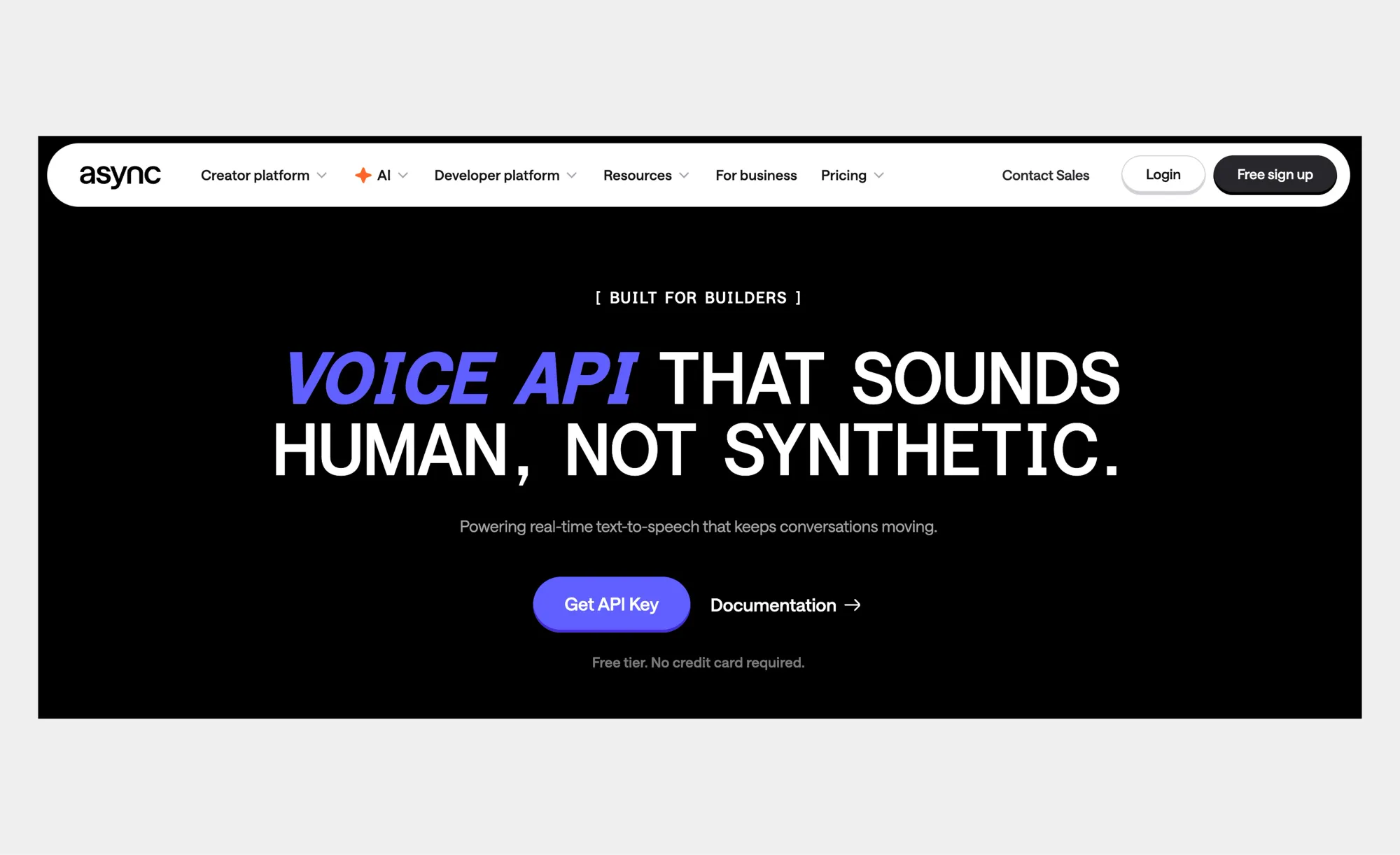
1. Async (best for content creation itself)
Async is built for turning ideas into publish-ready audio/video/voice content fast, so creation doesn’t become the bottleneck in your workflow. It also supports developer-style workflows via its pricing and API positioning, which is useful if your team is building automations around content production.
Pros
• Strong “create” layer: AI-powered audio/video/voice creation in one place
• Transparent API-style pricing options for teams that want scale/flexibility
Cons
• Not a full project management suite (you’ll still want a PM/ops tool for approvals + calendars)
Pricing
• Developer/API pricing includes a free tier and pay-as-you-go starting “as low as $1/hr” for TTS (per their pricing page)
• If you’re positioning via Async’s plans, Essentials and Pro pricing are listed on Async’s pricing page
2. Asana (best for approvals + production timelines)
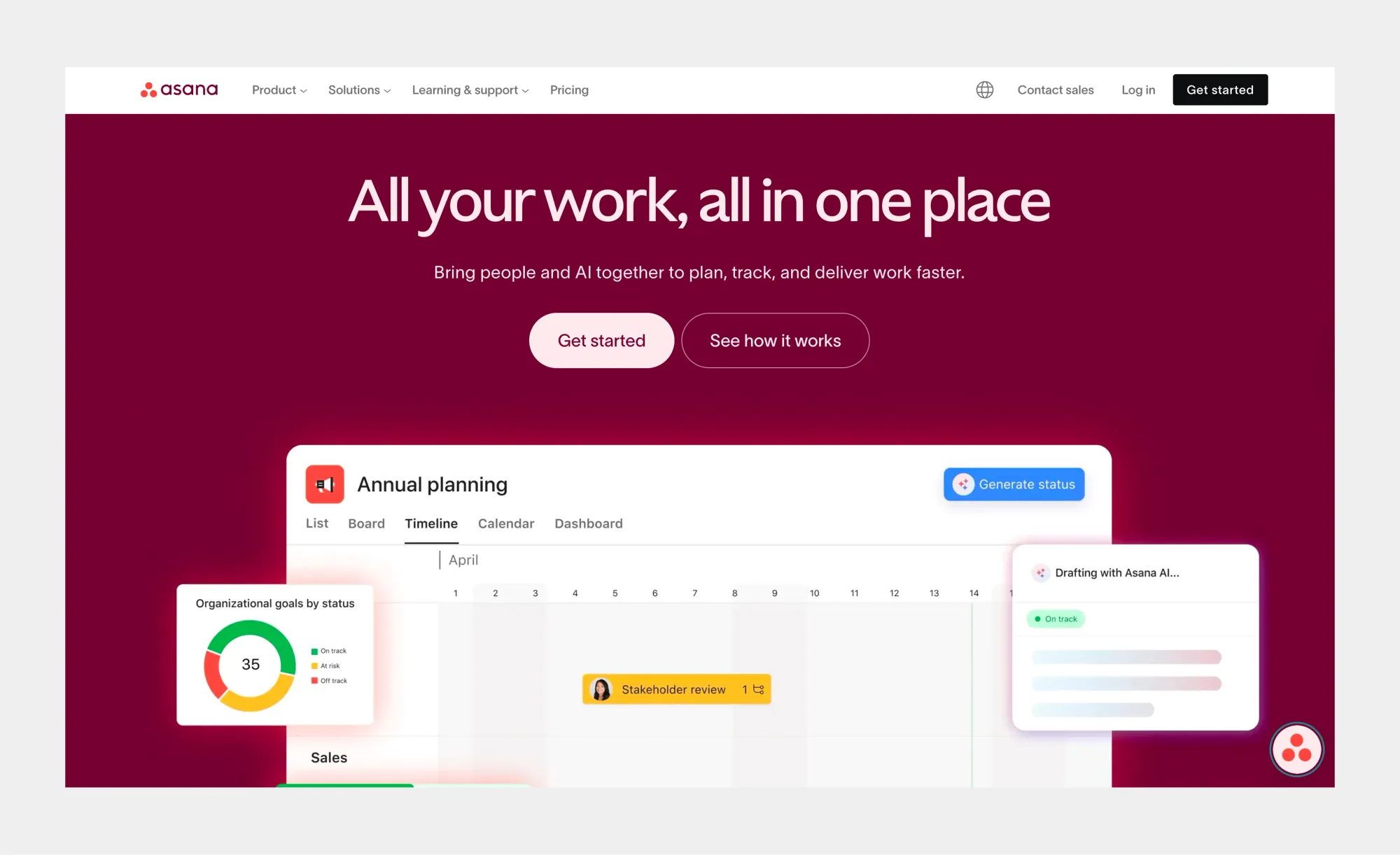
Asana is great when your biggest problem is cross-functional execution: assignments, due dates, review states, and dependency chains.
Pros
• Clear workflow visibility (who’s blocking what)
• Works well for structured approval steps and repeatable templates
Cons
• Can feel “process heavy” if you don’t keep rules simple
Pricing
• Asana publishes plan tiers on its pricing page (Personal/Starter/Advanced/Enterprise)
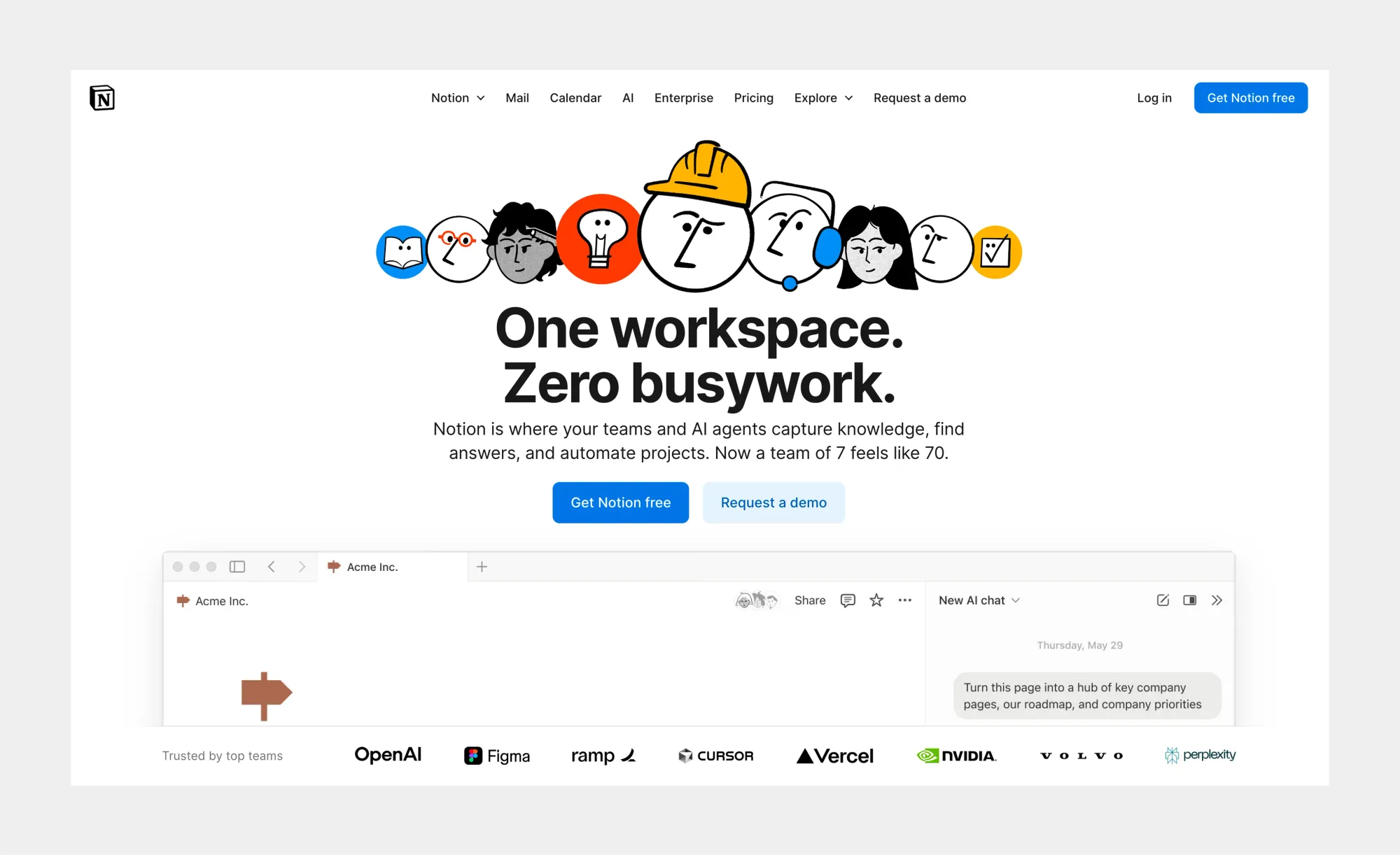
3. Notion (best for documentation + content ops “source of truth”)
Notion shines as the place where briefs, guidelines, content libraries, and editorial calendars live together, especially if your current workflow suffers from scattered documentation.
Pros
• Excellent for SOPs, playbooks, and centralized content documentation
• Flexible templates for editorial planning
Cons
• Needs discipline, or it becomes “another messy wiki”
Pricing
• Notion lists its plan tiers on the official pricing page
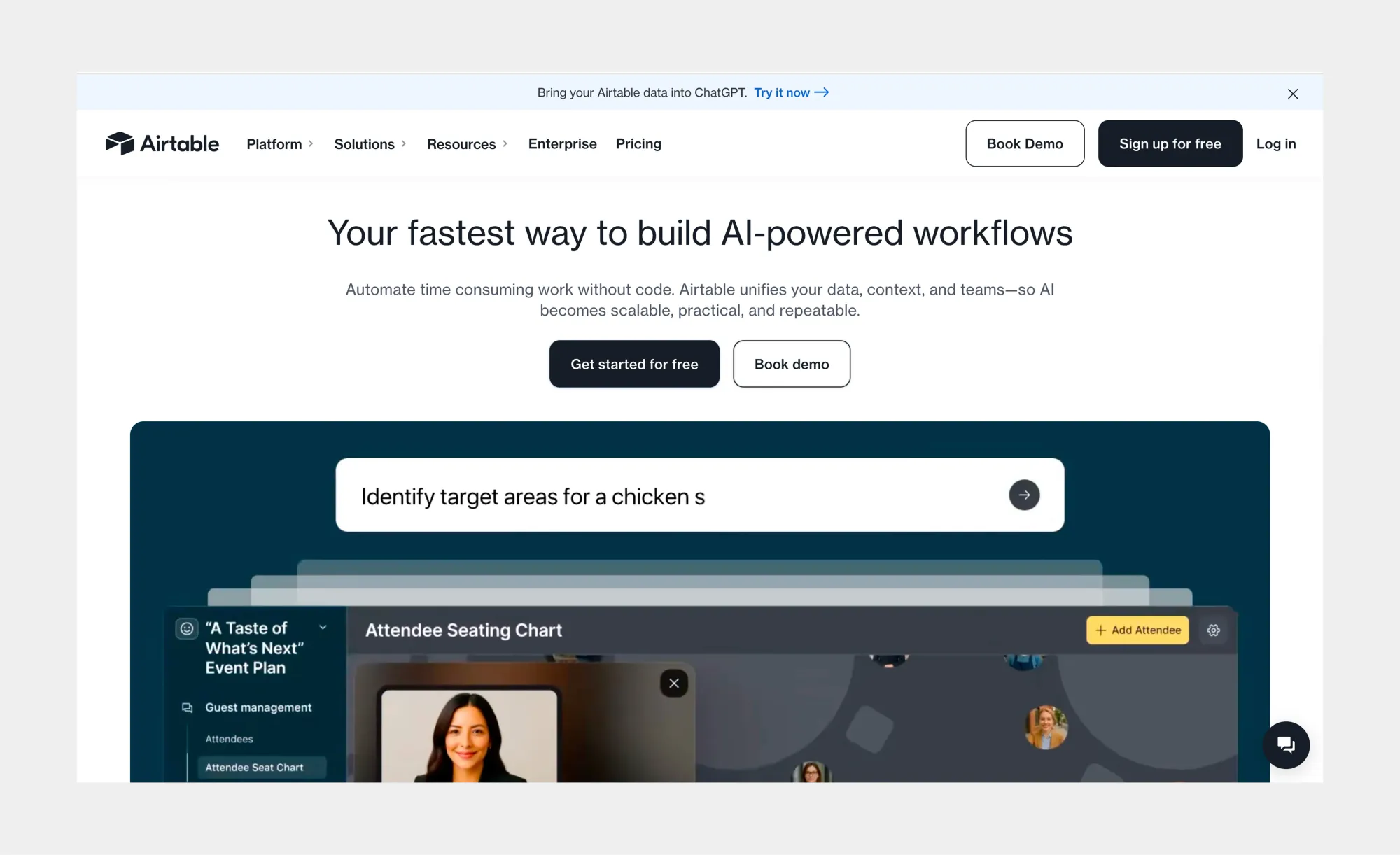
4. Airtable (best for editorial operations + multi-channel tracking)
Airtable is ideal when you need a structured “content database”: assets, statuses, owners, channels, repurposing paths, deadlines, and performance notes, all in one place.
Pros
• Great for managing multi-channel content at scale (tables/views/automations)
• Strong when you need more structure than a doc tool
Cons
• Costs can rise as teams scale, and needs grow (licenses, advanced features)
Pricing
• Airtable’s pricing page outlines its plan tiers (Free/Team/Business/Enterprise)
Final thoughts
Refreshing your content creation workflow for 2026 isn’t about chasing shiny tools or rewriting everything from scratch. It’s about letting go of habits that made sense in a very different content landscape, and designing workflows that reflect how content is actually created, discovered, and shared today.
The common thread across all five things to drop is intent. When workflows are built around visibility instead of value, speed instead of clarity, or metrics instead of people, they eventually collapse under their own weight. The teams that will win in 2026 are the ones treating content as a system: documented, adaptable, multi-channel by design, and optimized for being genuinely useful, not just clickable.
That’s also where having the right creation layer matters. When your tools remove friction at the making stage, it becomes much easier to experiment with formats, respond faster to real questions, and distribute content where audiences already are. If you’re rethinking your workflow this year, starting with a creation platform like Async can help you rebuild from the inside out, without adding more complexity to an already crowded stack.
New year, new workflow. Keep what compounds, drop what slows you down.