Creative learning isn’t about adding more “fun” activities to your curriculum.
Instead, it’s all about designing learning experiences where students actively build knowledge by creating something meaningful.
At its core, creative learning is an approach where students learn by exploring real problems, making choices, and expressing their understanding through projects, which is why it naturally connects to project-based learning.
If you’ve ever felt stuck assigning the same essays, worksheets, or slide decks and sensing that students are completing them on autopilot, you’re not alone. Passive learning, one-size-fits-all assignments, and limited student ownership can drain curiosity from even the most well-designed courses.
When students don’t have space to make decisions, experiment, or reflect, learning becomes about finishing tasks instead of developing understanding.
This guide is here to help you change that. We’ll break down what creative learning looks like in practice, how project-based learning supports it, and how to design projects that encourage students to think deeply, create confidently, and take ownership of their work.
Whether you’re teaching in a classroom, designing online courses, or rethinking assessments, you’ll find practical strategies you can actually use, not theory for theory’s sake.
What is creative learning in education?
Creative learning is what happens when students build understanding by making something new and meaningful, for themselves and for others, rather than only absorbing information and repeating it back. One definition I like (because it’s classroom-friendly) describes creative learning as a mix of internal sense-making and social sharing: students reshape their own understanding, then contribute it outward through a product, performance, explanation, or solution.
That matters because creative learning isn’t “extra.” It’s a different mode of learning—one that’s especially powerful when you want students to do more than memorize: connect ideas, transfer skills, and explain thinking in ways that show real understanding.
What research suggests creative learning changes (in real classrooms)
When learning environments are designed to support creativity, choice, exploration, iteration, and purposeful sharing, research reviews have found evidence of benefits beyond “students enjoyed it.” A widely cited systematic review of creative learning environments reported evidence linked to pupil attainment, confidence, resilience, motivation, problem-solving, interpersonal skills, and even school attendance (with the important caveat that study quality varies, which is normal in education research).
On the large-scale assessment side, OECD’s PISA 2022 creative thinking results also reinforce a key point educators often sense: creative thinking and academic performance aren’t enemies. Across OECD averages, creative thinking scores were positively correlated with core domains like math and reading, suggesting that “making room for creativity” doesn’t have to mean lowering academic expectations.
Case studies and “what it looks like” evidence. not just theory
• Project-based learning trials show measurable academic gains when projects are structured well: For example, a cluster randomized controlled trial of project-based learning in early grades (social studies + literacy) found impacts on achievement and motivation when teachers had solid supports, and the projects were intentionally designed (not just “do a project”).
• Even in high-stakes contexts, creative project approaches can improve performance: A randomized study in Advanced Placement courses found students in project-based versions of AP classes outperformed peers in traditional instruction on AP exam outcomes (including a higher likelihood of earning credit-qualifying scores).
• Broader research syntheses show PBL’s promise across subjects: Reviews compiled by PBLWorks/Buck Institute summarize multiple studies where PBL improved learning outcomes (especially in science and social studies), while also emphasizing that results depend on design quality and implementation.
Put together, these findings back up a practical takeaway: creative learning works best when it’s designed as a system, with clear goals, meaningful constraints, structured feedback loops, rather than treated as a one-off “creative assignment.”
What students typically gain from creative learning
You’ll see different outcomes depending on age group and subject, but these are the most consistent “wins” educators report, and research often supports:
• Engagement: students participate more when they have choices and a real audience
• Retention and understanding: students remember more when they apply concepts to something they build, not just something they review
• Confidence: students grow more willing to try, revise, and share ideas when learning is designed around iteration and ownership
And here’s the quiet bonus: creative learning gives you better evidence of thinking. When students create, you can assess decisions, trade-offs, reasoning, and reflection, not just the final answer.
What is project-based learning, and why does it support creative learning?
Project-based learning (PBL) is a teaching approach where students learn over time by actively working on a complex, real-world problem or question. Instead of moving lesson by lesson toward a test, students investigate, design, revise, and ultimately share a project that demonstrates what they’ve learned. Well-designed PBL units are structured, standards-aligned, and intentional, but they leave room for student decision-making along the way.
At its core, PBL usually includes a few defining characteristics educators recognize quickly:
• Long-term projects that unfold over days or weeks, not a single class period
• Real-world problems or questions that don’t have one correct answer
• Public or shareable outcomes, such as presentations, media projects, reports, or performances
Organizations like PBLWorks (formerly the Buck Institute for Education) emphasize that these elements aren’t optional add-ons; they’re what distinguish true project-based learning from “doing a project at the end of a unit.” When these structures are in place, PBL becomes a natural engine for creative learning rather than a separate instructional strategy.
So why does project-based learning support creative learning so effectively?
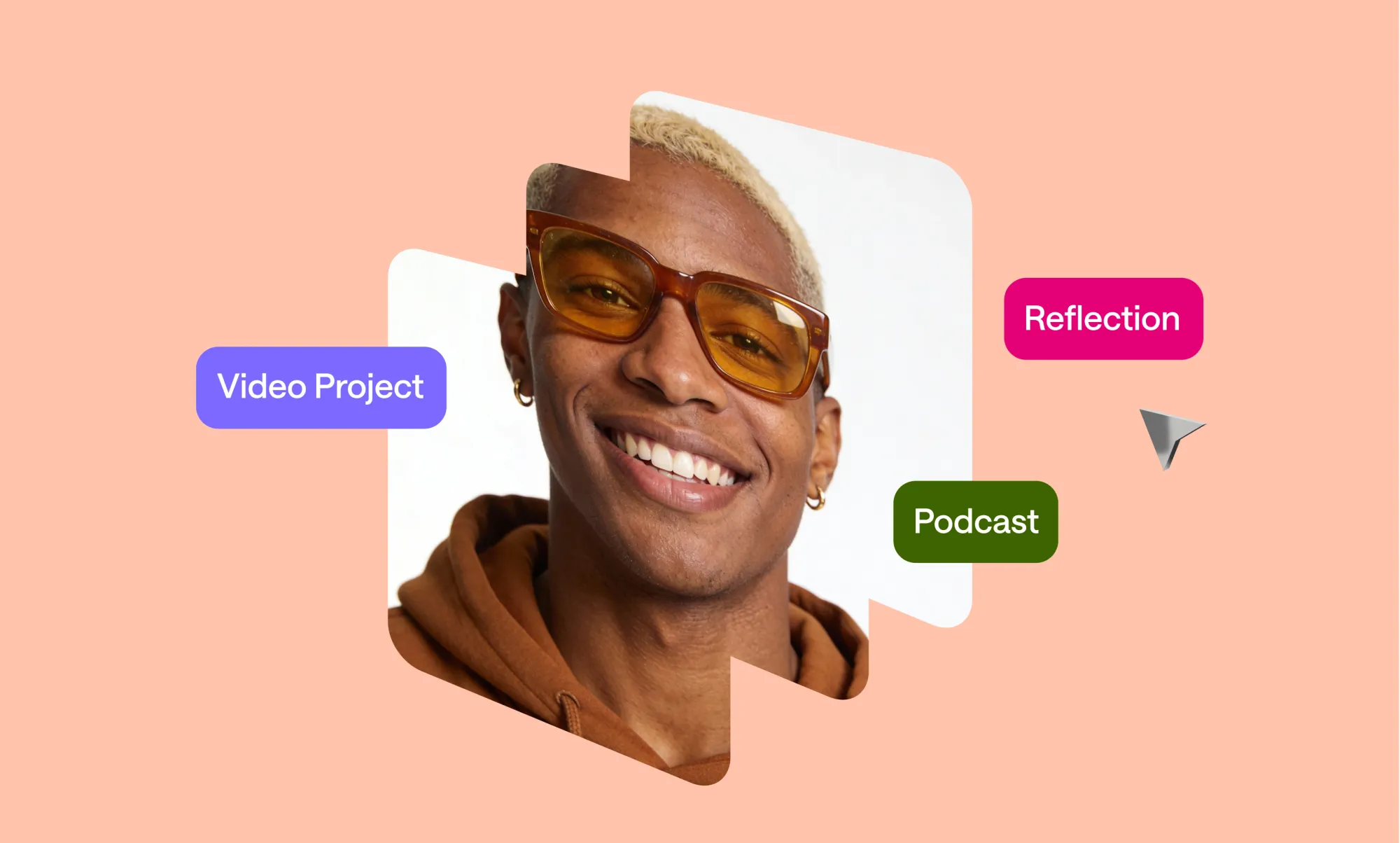
First, students choose formats, not just topics. In a PBL environment, students might demonstrate understanding through a video, podcast, prototype, research-based presentation, or multimedia reflection. That choice forces creative decision-making: How should this idea be communicated? What format fits the message? Who is the audience? Those questions push students beyond content recall into design and expression.
Second, students solve open-ended problems. Creative learning thrives when problems are authentic and unresolved. Real-world challenges, whether social, scientific, or cultural, require students to analyze constraints, test ideas, and adapt when initial solutions don’t work. Research summarized by Edutopia highlights that this type of cognitive demand supports deeper learning and transfer because students must apply knowledge rather than reproduce it.
Third, the process matters as much as the output. High-quality PBL emphasizes checkpoints, feedback, revision, and reflection. Students are assessed not only on what they produce, but on how they plan, iterate, and respond to feedback. This aligns directly with creative learning research, which shows that creativity develops through cycles of experimentation and refinement, not through one-shot performance tasks.
In practice, project-based learning gives creative learning a reliable structure. It answers a question many educators struggle with: How do I encourage creativity without losing rigor or control? PBL provides the framework, clear goals, meaningful problems, and shared outcomes, while creative learning fills it with student voice, exploration, and original thinking.
Key principles of project-based creative learning
Creative learning doesn’t happen just because students are working on a project. It emerges when projects are designed around a few core principles that shape how students learn, not just what they produce. The principles below show up consistently in strong project-based learning environments, and they’re what turn projects into meaningful, creative learning experiences.
Student ownership
Student ownership is the foundation of creative learning. When students have genuine control over decisions, such as the project format, focus, or approach, they move from completing tasks to driving their learning. This doesn’t mean removing structure; it means designing constraints that still allow choice. For example, students may all address the same essential question, but choose whether to respond through a video, podcast, research presentation, or multimedia project. Ownership increases motivation, but more importantly, it forces students to think creatively about how best to communicate what they know.
Real-world relevance
Creative learning is strongest when projects feel connected to life beyond the classroom. Real-world relevance gives students a reason to care about both the process and the outcome. This might involve addressing a community issue, solving a realistic professional problem, or creating content for an authentic audience. Research consistently shows that when students understand why their work matters, they invest more effort and demonstrate deeper understanding. Relevance also encourages creative thinking, because real-world problems are rarely neat, predictable, or limited to a single correct answer.
Iteration and feedback
Creativity develops through cycles of trying, revising, and improving, not through one-time submissions. In project-based creative learning, iteration is built into the design. Students receive feedback from teachers, peers, or even external audiences, then use that input to refine their work. This shifts the focus away from perfection and toward progress. Iteration teaches students that learning is dynamic and that strong ideas are developed over time, which mirrors how creative work happens in professional and academic settings.
Reflection and presentation
Reflection turns creative activity into learning. When students pause to analyze their choices, challenges, and growth, they make their thinking visible to themselves and to you. Reflection might take the form of written responses, recorded explanations, or short multimedia reflections tied to project milestones. Presentation adds another critical layer. Sharing work publicly, whether with classmates or a broader audience, raises the stakes and encourages students to think more carefully about clarity, quality, and impact. Together, reflection and presentation help students connect creativity with intentional learning, not just expression.
These principles work best as a system. When student ownership, real-world relevance, iteration, and reflection are designed together, project-based learning becomes a reliable framework for creative learning, not an occasional success, but a repeatable practice.
Examples of project-based learning that foster creative learning
One of the easiest ways to understand creative learning is to see what it looks like in real projects. The examples below are intentionally concrete, they focus on what students create, the skills they develop, and why each format supports creativity rather than just content coverage.
Video storytelling projects
In video storytelling projects, students communicate ideas through short documentaries, explainers, or narrative videos tied to a subject-area question. For example, students might create a video explaining a historical event from multiple perspectives, documenting a local environmental issue, or teaching a scientific concept to a younger audience.
This format encourages creative learning because students must make decisions about structure, visuals, pacing, and tone, not just accuracy. Tools like Async can support this kind of work by giving students a simple space to record presentations, narrate scripts, and reflect on their projects without turning the assignment into a technical obstacle. The focus stays on storytelling and understanding, not on mastering complex software.
Skills developed: communication, narrative thinking, media literacy, synthesis of ideas.
Student-led podcasts
Podcast projects ask students to explore a topic through conversation, interviews, or scripted audio episodes. These projects work especially well in humanities, social sciences, and language courses, where explaining ideas clearly matters as much as researching them.
Because audio removes the pressure of being on camera, many students feel more comfortable experimenting with voice, tone, and structure. Podcasting also highlights the importance of revision. Students quickly hear when an explanation doesn’t quite work and adjust accordingly. Creative learning emerges as students learn to translate complex ideas into engaging, understandable discussions.
Skills developed: critical thinking, listening, verbal communication, and collaboration.
Research + presentation hybrids
This format blends traditional research with creative expression. Students conduct structured research but choose how they present findings: interactive presentations, visual explainers, short videos, or multimedia reports. The key is that research isn’t the end point, it’s the foundation for creation.
Creative learning shows up in how students organize information, decide what matters most, and adapt their message to an audience. This approach keeps academic rigor intact while giving students space to demonstrate understanding in original ways.
Skills developed: research literacy, analysis, synthesis, and audience awareness.
Reflection-based multimedia journals
Instead of a final project only, students maintain ongoing multimedia journals throughout a unit or term. These might include short video reflections, audio notes, images, or written entries documenting progress, challenges, and insights.
This approach supports creative learning by emphasizing process over polish. Students practice articulating their thinking, evaluating their own work, and connecting ideas over time. Multimedia reflection also gives quieter students or non-traditional learners more ways to express understanding.
Skills developed: metacognition, self-assessment, expressive communication.
Group documentary-style assignments
In group documentary projects, students collaborate to investigate a topic and produce a cohesive final piece, often combining research, interviews, narration, and visuals. These assignments mirror real-world creative work, where collaboration, negotiation, and feedback are unavoidable.
Creative learning emerges through role distribution, problem-solving, and iterative decision-making. Students must align their individual contributions into a shared vision, which deepens both content understanding and teamwork skills.
Skills developed: collaboration, project management, creative problem-solving.
Across all of these examples, the pattern is consistent: students aren’t just completing tasks, they’re making choices, revising ideas, and communicating understanding in purposeful ways. That’s the heart of creative learning in project-based environments.
How to implement project-based learning step by step
Designing project-based learning doesn’t require reinventing your curriculum, it’s about reshaping how students engage with it. The steps below give you a practical, repeatable way to implement PBL while keeping creative learning at the center.
Step 1. Define a meaningful problem or question
Start with a problem that feels worth solving. Strong project-based learning begins with an open-ended question tied to real-world contexts or authentic challenges. Instead of asking students to describe or summarize, frame questions that invite investigation, decision-making, or creation. A good test: if the question can be answered in a paragraph or with a single correct response, it’s probably too narrow for a project.
Step 2. Let students choose how they express learning
Once the problem is clear, build in a choice. This is where creative learning takes shape. Allow students to decide how they demonstrate understanding, through video, audio, visual presentations, written work, or multimedia combinations. Clear criteria keep expectations high, but flexible formats give students ownership and encourage them to think creatively about communication and audience.
Step 3. Build in checkpoints and feedback
Projects work best when they’re broken into stages. Plan intentional checkpoints where students share drafts, outlines, or early versions of their work. Feedback at these moments, whether from you or from peers, helps students refine ideas before the final submission. These checkpoints also make projects easier to manage and assess, especially in larger classes.
Step 4. Encourage iteration, not perfection
Creative learning thrives when students are allowed to revise. Make it clear that early drafts are expected to be imperfect and that improvement is part of the learning process. Encourage students to test ideas, respond to feedback, and make changes. When revision is normalized, students take more creative risks and focus less on “getting it right the first time.”
Step 5. End with reflection and sharing
Every project should close with reflection and some form of sharing. Reflection helps students articulate what they learned, what challenged them, and how their thinking evolved. Sharing, through presentations, screenings, or peer discussions, adds accountability and purpose. It also reinforces that learning is something to be communicated, not just completed.
When these steps are designed together, project-based learning becomes manageable and sustainable. More importantly, it creates space for creative learning to develop naturally, through choice, iteration, and meaningful engagement.
The role of digital tools in creative, project-based learning
Digital tools play an important role in creative learning, but only when they support thinking, creation, and reflection instead of distracting from them. The goal isn’t to introduce more tools; it’s to choose the right categories of tools that align with how students actually work during projects.
Here’s a practical way to think about digital tools in project-based learning, without overload.
• Recording and storytelling: These tools help students capture ideas, explain thinking, and tell stories in their own voices. This might include recording presentations, narrating a script, conducting interviews, or documenting learning progress. Recording tools are especially powerful for creative learning because they allow students to rehearse, reflect, and communicate ideas more naturally than text alone.
• Editing and iteration: Creative projects improve through revision. Editing tools allow students to refine their work over time, cutting unnecessary content, clarifying explanations, or reorganizing ideas. When editing is accessible, iteration becomes part of the learning process rather than an afterthought.
• Collaboration and feedback: Project-based learning is rarely a solo activity. Collaboration tools support shared planning, peer feedback, and group decision-making. Whether students are co-creating content or reviewing each other’s work, these tools help make learning visible and social, which is essential for creative growth.
• Presentation and sharing: Creative learning benefits from an audience. Presentation tools allow students to publish, present, or showcase their work, whether to classmates, educators, or a wider community. Knowing their work will be seen encourages students to think more carefully about clarity, structure, and impact.
When digital tools are chosen around these categories, they stop feeling like “extra tech” and start functioning as learning supports. They help students plan, create, revise, and communicate, exactly the processes that creative, project-based learning depends on.
Using Async to support creative project-based learning
When students work on creative, project-based assignments, they need a space where ideas can move from planning to creation to reflection without constantly switching tools. This is where Async fits naturally into the workflow, not as a separate “tech layer,” but as a workspace that supports how creative learning actually happens.
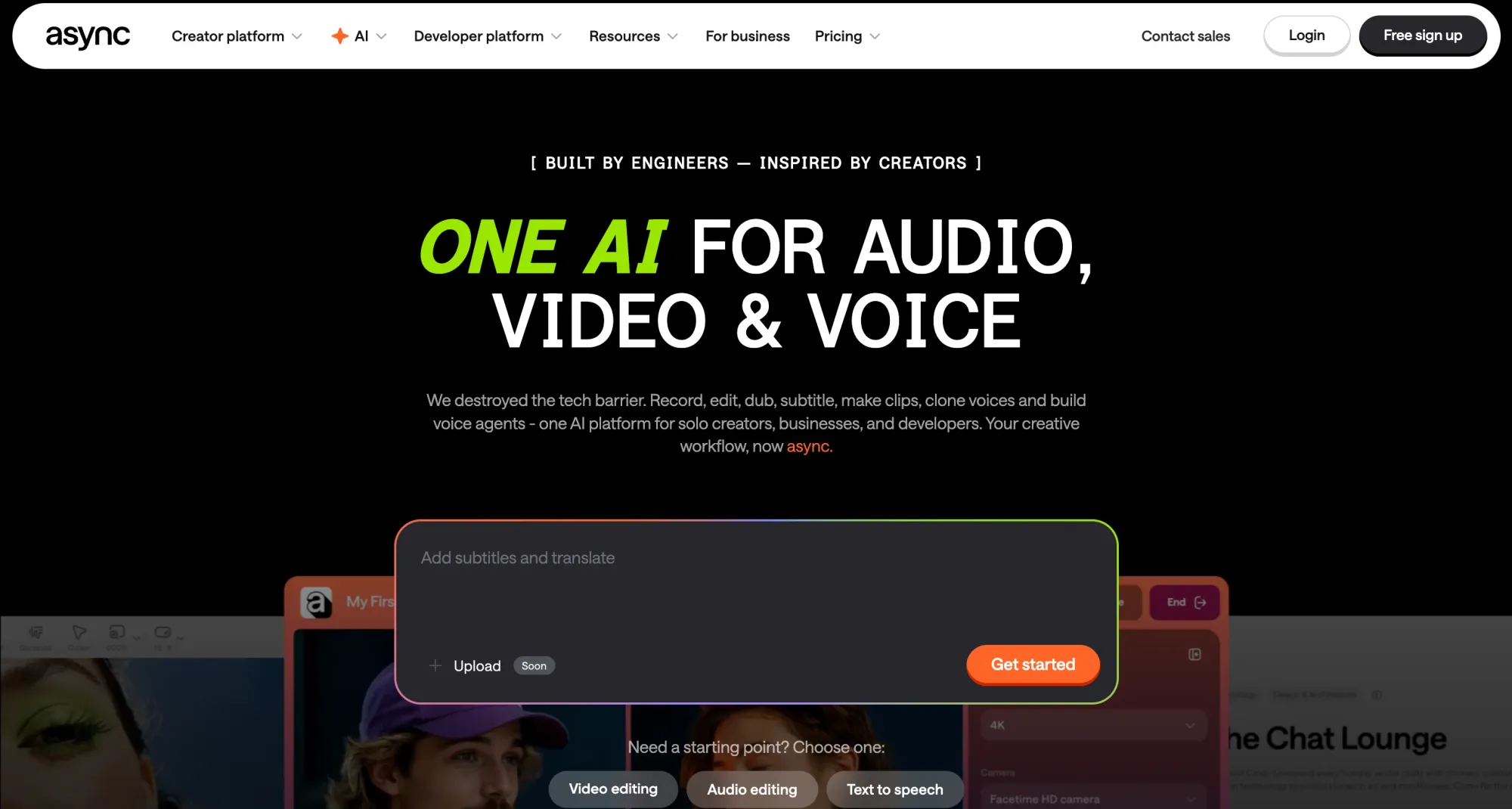
Async works well for student-created media projects because it brings recording, iteration, and collaboration into one place. Instead of treating media as a polished final step, students can use the tool throughout the project lifecycle.
Here’s how educators typically use it in project-based learning contexts:
1. Recording presentations and explanations: Students can record video or audio explanations of their thinking, research findings, or design decisions. This is especially useful for formative assessment, where you want to understand how a student arrived at an idea, not just the final output.
2. Creating video or audio assignments: For projects like video storytelling, podcasts, or documentary-style work, Async allows students to focus on content and structure rather than technical complexity. This lowers barriers for participation and keeps the emphasis on creative expression and clarity of ideas.
3. Reflecting on projects: Reflection is central to creative learning, and Async makes it easy for students to record short reflections at different stages of a project. These reflections can capture learning progress, challenges, and revisions in a way that written responses sometimes can’t.
4. Supporting group collaboration: In group projects, students can contribute recordings, review each other’s work, and iterate together. This mirrors real-world creative collaboration and helps educators see both individual contributions and group dynamics.
Used this way, Async supports creative learning without dictating how projects should look. It gives students flexible ways to express understanding, revise ideas, and share work, while giving educators clearer insight into student thinking and progress.
How to assess creative learning in project-based environments
Assessment is often where creative learning feels hardest to manage, but in project-based environments, it can actually become clearer and more meaningful. The key shift is moving away from grading only the final product and toward assessing thinking, process, and growth alongside outcomes.
Process-based assessment
In creative, project-based learning, how students work matters as much as what they produce. Process-based assessment looks at planning, research, decision-making, and revision over time. This might include project proposals, drafts, checkpoints, or recorded explanations of choices students made along the way. Assessing the process helps you recognize effort, strategy, and problem-solving, even when a final product isn’t perfect.
Reflection as part of grading
Reflection turns creative work into visible learning. When students explain what they tried, what changed, and what they learned, you gain insight that a finished project alone can’t provide. Reflection can be written, audio, or video-based and can focus on questions like: What challenges did you face? How did feedback shape your work? What would you do differently next time? Making reflection part of the grade reinforces that learning is about growth, not just results.
Peer feedback
Peer feedback supports both assessment and learning. Reviewing each other’s work helps students develop critical judgment, learn to articulate constructive feedback, and see multiple approaches to the same problem. Structured peer feedback, guided by clear criteria, also reduces pressure on the educator while strengthening collaboration and accountability within projects.
Together, these approaches create a more balanced assessment model, one that values creativity without sacrificing rigor. Students understand what’s expected, and educators gain richer evidence of learning than a single final submission could ever provide.
Common challenges and how to solve them
If you’re thinking, “This sounds great, but what about the realities?”, that’s fair. Creative, project-based learning comes with a few common hurdles, but none of them are deal-breakers.
• Time constraints: Projects can feel like they take over the schedule. The fix is to think in phases. Break projects into smaller milestones, reuse project structures, and start with shorter timelines before scaling up.
• Uneven student participation: Group work isn’t always equal. Clear roles, individual check-ins, and short reflections help you see who’s doing what and step in early if something feels off.
• Assessment concerns: Grading creative work can feel subjective at first. Clear criteria and process-focused rubrics go a long way. When students know how they’re being assessed, creativity feels safer and more focused.
• Technical barriers: Too many tools can slow things down. Keep the tech simple, introduce tools gradually, and choose platforms that don’t require a steep learning curve.
Most of the time, these challenges ease up once students understand expectations and get used to working in project-based formats.
Conclusion
Creative learning isn’t an extra layer you add once the “real teaching” is done. It’s a way of designing learning, so students actively make meaning, instead of just receiving information. Project-based learning gives you the structure to do that, while leaving room for curiosity, choice, and creativity.
When students work on real problems, choose how they express ideas, and reflect on their process, understanding goes deeper and sticks longer. Creativity stops being something reserved for special projects and becomes part of everyday learning.
If you’re looking to move beyond passive assignments and help students truly own their learning, creative, project-based approaches are a practical place to start. You don’t need to overhaul everything at once; small shifts in how projects are designed can make a meaningful difference.